
What Would You Actually Miss?
Story at a glance
“Margo, an inventory clerk with a serious illness, keeps a private list called What Will I Miss. She asks a colleague who has stopped noticing his own life the question she has been asking herself.”
Share this story
I have carried the same blue thermos into this warehouse for eleven years, at ten to six every morning, as the night shift is coming off. That is how I came to know Ethan Doyle. I'm Margo Bennett, an inventory clerk, fifty-eight, and I'm going to tell you this in the order it happened, which isn't the order I understood it.
In March a doctor gave me news I haven't told many people. I have cancer, and he used the word months and then, because I looked at him, the word year. He said it carefully. I thanked him and asked where I could park. Thursdays I go for treatment before work: a clinic on the second floor of a building off Route 33, a reclining chair, a bag of something clear on a pole, and a nurse called Dolores who always has a kind word and never a false one.
At work only my supervisor, Dale, knows, because he signs my leave, and my son Leonard. I don't want the others to know. It isn't pride. It's that the warehouse is the one place where nobody looks at me as though I'm already half gone.
What I did instead was make a list. I started it in the parking lot after the second appointment, on the back of a receipt, and called it What Will I Miss. I add to it at red lights. Coffee from the thermos at six. The sound of the forklifts reversing. Leonard's terrible singing in the kitchen. The smell of cardboard on a cold morning, which I know is strange. It's the most honest thing I have ever written. It turns out you can only write that list when you stop worrying who will read it.
Ethan Doyle works nights in dispatch. He's thirty-four and has been here nine years. He has good hands and a good head for the pattern of a busy dock, and over the last year his face had started to close when you said good morning, like a shop front coming down. I knew a bit about him because in a warehouse you know everything. I knew about the divorce. I knew his son Owen lived two hours away and that their calls had become short and polite. I knew he had been passed over twice for floor manager, the second time for a woman who had been here two years, and that he had congratulated her and driven home with his jaw clenched.
The first real conversation we had was over a microwave burrito. He was standing in the break room staring at it going around. I had brought too much lunch, as Leonard always packs me too much, and I unwrapped a sandwich and asked if he wanted half. He said he was fine. I put half on a napkin by his elbow and went back to my desk. Five minutes later it was gone. I did that for several weeks and we hardly spoke.
On the second Thursday in May I was late because of the clinic. When I got in, he was sitting alone in the break room with his elbows on the table and his face in his hands. A driver had shouted at him, a new hire had loaded the wrong trailer, and a shipment had vanished between two docks. It was just one of those mornings, and I could see he had gone down his list of reasons his life was stuck.
I poured a coffee and sat down opposite him. He said, "Long night." I said nothing. I'm not a talker, and I've found that when someone is working up to something, silence is the best chair you can offer. Then I asked him what I had written on the back of the receipt the week before. I hadn't planned to. It came out in my own voice, because I had been asking it of myself.
"Ethan, if this were your last day here, if tomorrow someone told you not to come back, what would you actually miss?"
He frowned and said he didn't follow. I said, not the pay. I know the pay. What would you miss. He opened his mouth and nothing came out. I watched him realize he didn't know, and I saw that the not-knowing frightened him more than the shouting driver. I finished my coffee and said, "No rush. It's a slow question," and took my thermos back to my desk.
I can't claim credit for what he did next. I only know what I saw from across the warehouse, because I notice things. It's my job to count them.
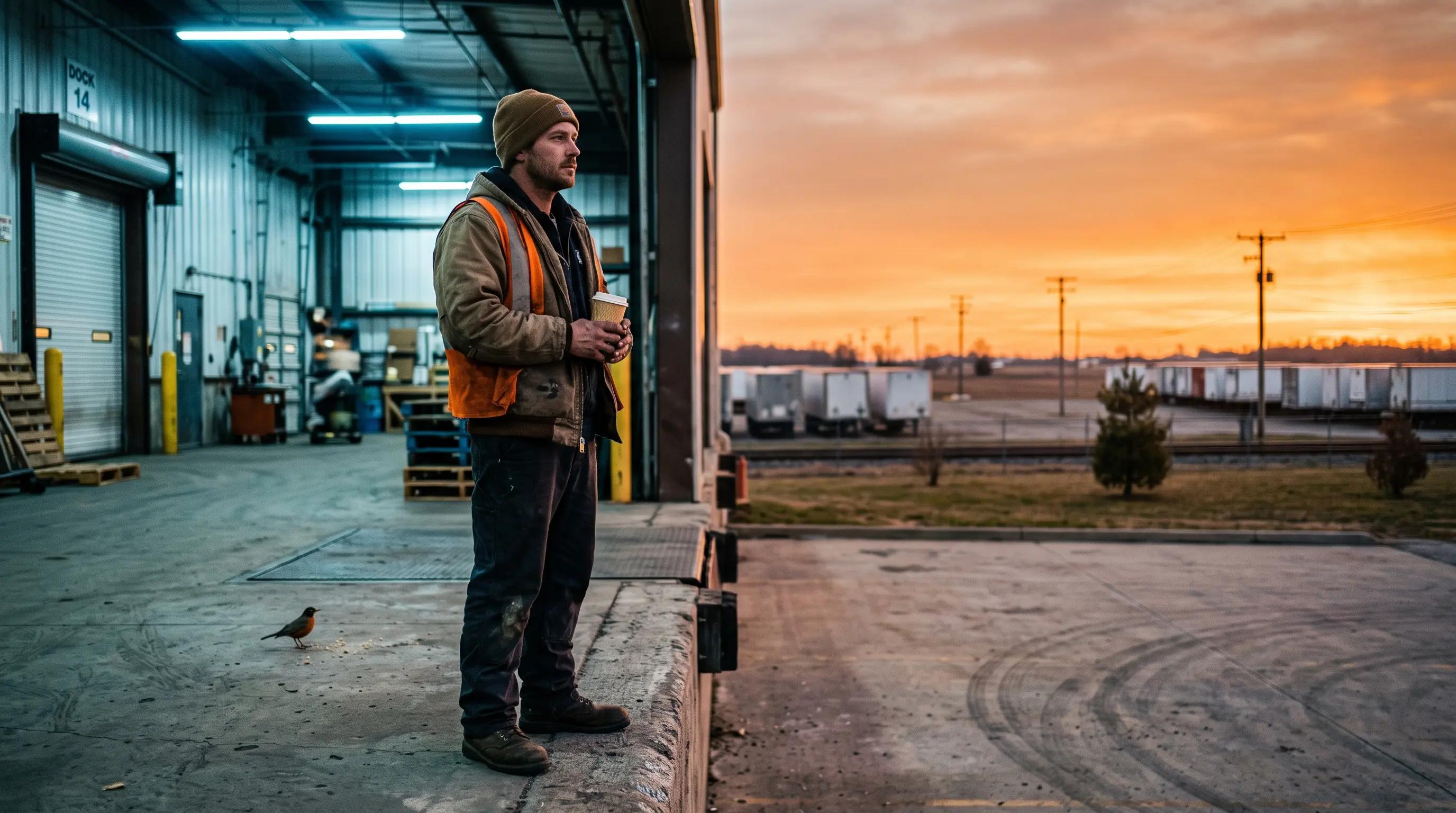
He started laughing at Rick's jokes. Rick drives the forklift and has the worst sense of humor in the state, and in the middle of a gag about the ancient copier retiring he stopped and said, "There he is." Ethan said, "Who?" and Rick said, "That guy. Haven't seen him in a while." One morning Ethan took his coffee out onto the loading dock instead of sitting under the fluorescent lights, and I watched from my window as he stood there for five minutes, doing nothing, watching a robin hop across the asphalt in the first orange light. I'll be honest. That moved me more than anything I'd seen in a long time.
Then he called his son. I know because he told Rick and Rick told everyone. Owen said they were building a bridge at school and it kept falling down, and Ethan said he had built a few things that fell down. They spent a Saturday with popsicle sticks and wood glue and a lot of tape. By late afternoon the bridge was standing, crooked and sticky, and Owen said, "We built it."
On a Tuesday he came in with two coffees and put one next to my paperwork. "You always bring everyone else one," he said. "I figured it was your turn." I asked if he was trying to make me emotional before six in the morning. "Don't push it," he said. He didn't know it, but he had put a coffee down beside a woman who was bracing for a hard day. I told him you'd be surprised how easy it is to disappear and still turn up every day. I meant it for him. I also meant it for me.
I stopped adding to the list after that. It isn't that I ran out. It's that I realized the list had been answering itself all along, in places I had stopped looking: coffee at six, a sandwich on a napkin, a man on a loading dock watching a bird. When you know you have limited time, what you notice is how much of what you'd miss is already happening.
Thursday is tomorrow. Dolores will have a kind word, and I'll take my thermos with me. When I get to the warehouse, late and a little gray, there will be a second cup on my desk.
Every story matters
Stories like this one remind us that no matter how difficult life gets, there is always a way through. If this story moved you, share it — you never know who needs to read it today.
Share this story
More in Work & Career
You might also like

The Project He Forgot
Arjun leaves a good job to chase what everyone on his feed seems to have, and spends months collecting rejections. The answer turns out to be a project he built three years earlier and forgot.
Measuring for Aprons
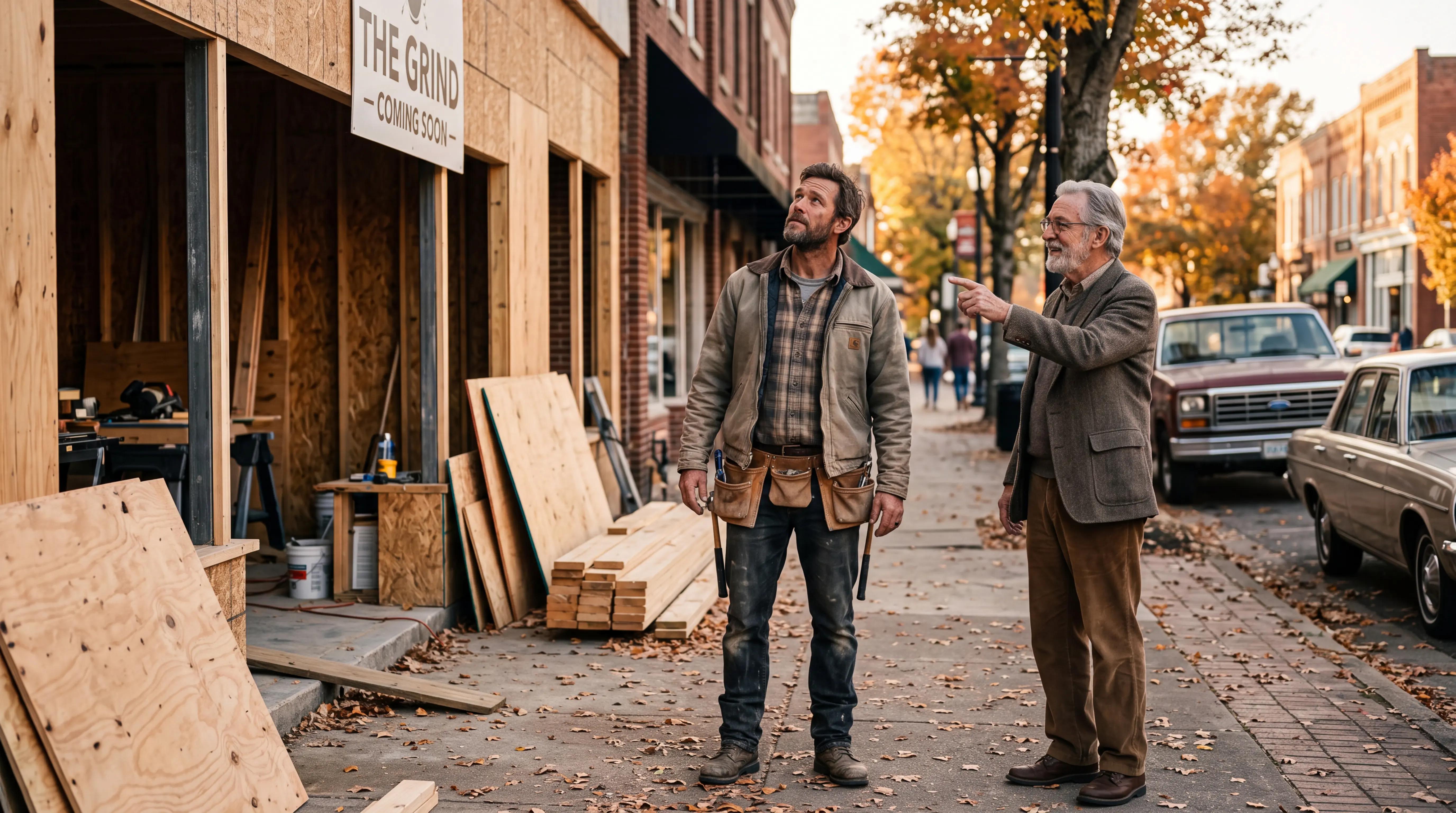
The school fees have gone up forty per cent. On a rainy Wednesday in Kandy, a tailor notices the café being built across the road and what its staff will need to wear.