
The Designer by the Window
Story at a glance
“Imran talks to everyone at his Colombo agency except the quiet designer by the window, who has never answered him. A promotion, a pitch and a paper cup of tea change that, a little.”
Share this story
I should say first that I talk too much. Everyone at Orchid Creative will tell you that, and half of them mean it kindly. I'm Imran, I'm thirty-one, I do account-facing design for brands that sell things in jars, and in my three years there I've learned the names of the security guards' children, the tea lady's cricket team and the CEO's dog. There's one person on our floor whose name I know and whose voice I've never heard, and that's Anushka Dias.
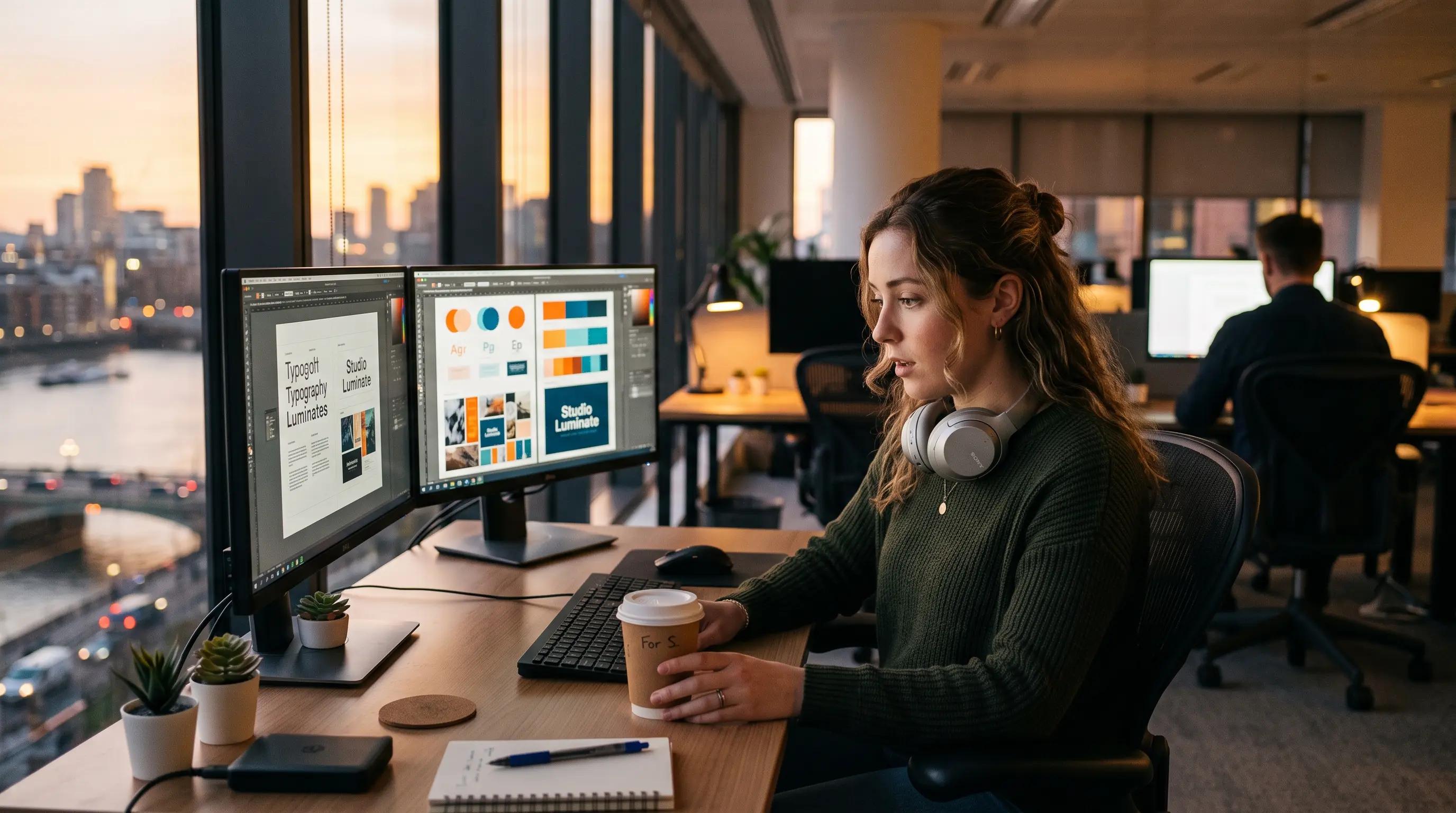
She sits by the window with the best view in the building, which looks onto Beira Lake and the heron that lives on the water-pipe. She wears headphones from nine to five. She's the best designer in the company, and I don't say that to be polite. I've watched her fix a logo by moving one letter two pixels to the left. The client couldn't say what had changed. They just looked happier.
And she doesn't like me. I worked that out in my first week.
In week two I said good morning and she nodded without looking up. In week six I asked if she wanted lunch from the place on Union Place and she said, "I brought something." In month four I made the mistake of a joke about the printer, and she looked at me with an expression I can only describe as professional patience. After that I stopped trying, mostly. A man can only be nodded at so many times.
It stung more than I let on. I'm good with people, it's the one thing I'm good at, and she's the one door I couldn't open. I did what I always do when someone's cold to me: I decided it was about her. She thinks she's above all of us, I told myself. She thinks the rest of us are noise.
I'm telling you this so you know I wasn't innocent.
She keeps four succulents on her desk, in tiny blue pots, and waters them on Mondays from a glass she brings from home. I know this because I have looked at those plants every day for three years, and I couldn't tell you the name of a single thing she likes besides them.
Then came Meridian Health.
It was the biggest account of the year, a wellness company with a national rebrand, and everyone knew the Senior Designer promotion would go to whoever carried it. Rohan, our creative director, put the two of us on it without saying so out loud. I did the pitching and client side. Anushka did what Anushka does. For six weeks she was in at seven and out at midnight, and the security guard started bringing her tea. I'd stay to help her with the deck and she'd say, "I've got it," very politely, and I'd go home.
The work was extraordinary. I'm not exaggerating. Earth-toned, quiet, photography that looked like someone's real kitchen. When the Meridian marketing head saw the concepts she emailed Rohan on a Sunday to say it was the best proposal she'd seen in years.
Two days before the board meeting, Rohan called me into his office. One of the Meridian directors, a Mr Jayakody, had worked with me on an earlier job and had asked for me to present. "It's relationship stuff," Rohan said. "You know how it is."
I said I'd rather Anushka did it. It was her work. I said that clearly, and then I said it again.
Rohan shook his head. "They want a face they know. Say her name in the room. She'll understand."
I could have refused, and I didn't. That's the part I'd take back. I told myself that if I turned it down, someone worse would get the slot, and then I went and presented. I said, "Everything you're seeing came from Anushka Dias," and pointed to her at the far end of the table, and three directors nodded and one wrote it down and then the whole room moved on to the budget. Anushka looked at the table the entire time.
On Monday Rohan announced the promotion. My name. I was so sure it had to be a mistake that I looked behind me.
He announced it at the glass wall by the pantry, with a plate of samosas somebody had ordered for the occasion. People clapped. I clapped, because my hands didn't know what else to do. Across the floor I saw Anushka at her desk by the window. She had stopped typing, and she was looking at the heron.
I went to Rohan afterwards and told him she should have it. He said leadership meant helping a room believe in the work, and that I'd been the one to do that. I said I'd like him to tell her that himself. I don't know if he did. She took a sick day on Tuesday, and when she came back she'd changed. She started saying good morning to people. Loudly, stiffly, like someone reading from a card. At Friday drinks she laughed a beat late at everything, and I watched her stand by the door with a glass of lime soda looking like someone at a funeral for a person she hadn't known.
I wanted to tell her to stop. Obviously I didn't.
Two weeks after that, there was the yogurt pitch. She'd asked to present her own mock-ups, which she'd never done. I was sitting at the back. She got to the third slide, her hand started to shake on the remote, and she said "I'm sorry" to the room and walked out.
I found her in the emergency stairwell. I didn't go in. I stood at the door with my hand on the bar and listened to someone trying to breathe slowly on the concrete steps, and then I went away again, because nothing I'd ever said to her had helped.
What I could do was small. I went to the pantry. I made tea in a paper cup, no sugar because I'd noticed she took none, and I walked back and left it on the floor outside the stairwell door, where she'd find it. Then I went to my desk.
She did come back in, half an hour later, and sat down at her window without looking at anyone. Ten minutes after that I saw the paper cup on her desk beside the keyboard. She must have picked it up on her way in.
The next evening I stayed late on purpose. Most of the floor had gone by six. She was working. I went to the pantry, brought two cups back, and put one down beside her mouse without a word, with a nod, like a waiter.
She took off one headphone. It was the first time I'd seen her whole face from the side.
"Thank you," she said. "For the other day."
I said it was nothing. She turned a pen over on the desk. "I thought you couldn't stand me," she said, and I laughed, because I was so surprised, and then she laughed too, a short helpless sound, and the heron outside took off from the pipe and went across the lake.
"I thought you couldn't stand me," I said.
We stayed like that for a bit. I wanted to tell her about the pitch, about Rohan, about the promotion that ought to have been hers, and every sentence I tried in my head sounded like an excuse. So I said nothing. I drank my tea. She put the headphone back on, but only halfway, over one ear.
That was a Thursday. I don't know what happens next week. She might nod at me again, and I'd have it coming. But I've started leaving a cup at her desk at six, and so far she's left it there until it goes cold, and so far she's drunk it.
If I took anything from it, it was this. For three years I was certain what she thought of me, and I never asked. She was just as certain about me. We were both wrong.
Every story matters
Stories like this one remind us that no matter how difficult life gets, there is always a way through. If this story moved you, share it — you never know who needs to read it today.
Share this story
More in Mental Health & Burnout
You might also like
The Kind of Tired That Sleep Doesn't Fix
Maya has been promoted twice in three years and never misses a deadline. One Monday in March she sits down on the bathroom floor and can't get up. The story follows what she does next.

Nineteen Days
After his startup shuts down, a developer in Dublin counts the days. Most of them are small: a plate, a walk, a coffee, a line of code.