

From Rejection to Bestseller: The Single Mom Who Refused to Quit
Story at a glance
“The waitress noticed the woman long before anyone else did. She had been sitting by the window for almost ninety minutes with nothing more than a cup of chamomile tea that had long since gone cold. She wasn't waiting for anyone. She was writing the story that would eventually change both their lives, she just didn't know it yet.”
Share this story
The Woman by the Window
The café owner, Mike Turner, glanced toward the corner table before quietly shaking his head.
"Leave her alone," he told the waitress with a gentle smile. "Some people come here for coffee. She's here because she needs somewhere to breathe."
Outside, a cold January rain soaked the streets of Seattle. Gray clouds swallowed the skyline, and commuters hurried past the café windows with collars turned up against the wind.
Inside, everything felt slower.
Warm lights reflected against the glass. Soft jazz floated through the speakers. Fresh coffee filled the air.
At the little table near the window sat Emily Carter, twenty-nine years old, wearing an oversized thrift-store coat that had seen better winters.
Her backpack rested on the floor beside her.
Inside it were exactly three things that mattered.
A spiral notebook. A second-hand laptop whose battery lasted less than twenty minutes. And a folder containing the first hundred pages of a story she couldn't stop thinking about.
She checked the clock.
Two hours before she had to pick up her daughter.
Two hours she refused to waste.
How She Got Here
Only eighteen months earlier, Emily had imagined a completely different future.
She had been living in Arizona with her husband, believing they were slowly building a life together.
Then little cracks appeared. Arguments became daily routines. Silences became longer than conversations. Promises slowly turned into disappointments.
Eventually, there wasn't a marriage left to save. Only paperwork.
Rather than spend years fighting over what was already broken, Emily packed one suitcase, buckled her two-year-old daughter Grace into her car seat, and drove nearly sixteen hours to Seattle, where her older sister lived.
She arrived with less than four hundred dollars. No job. No apartment. No plan beyond surviving another week.
Divorce has a way of shrinking your world.
Before, Emily had worried about vacations and career goals. Now she worried about diapers. Groceries. Electric bills. Whether the gas tank could survive until payday.
Government assistance helped just enough to keep them afloat, but barely.
Every grocery trip became a math problem. Every unexpected expense felt like an emergency.
Sometimes she skipped dinner so Grace could have fresh fruit instead of canned vegetables.
She never complained.
Children notice far more than adults realize.
Grace would often slide half her sandwich across the table.
"I'm full, Mommy."
Emily knew she wasn't.
The little girl simply believed sharing made everything better.
Those moments hurt more than the empty refrigerator.
The Invisible Battle
The hardest battle wasn't financial.
It was invisible.
Several months after arriving in Seattle, Emily's doctor diagnosed her with severe depression.
Not sadness. Not temporary stress.
Depression.
The kind that makes ordinary tasks feel impossible. Getting dressed required effort. Answering text messages felt exhausting. Even brushing her hair sometimes seemed like climbing a mountain.
Friends would say things like, "You just need to stay positive." Or, "Things will get better."
She appreciated their kindness.
But depression doesn't disappear because someone tells you to smile.
Still, every morning she got up.
Not because she felt strong.
Because Grace needed breakfast. Grace needed clean clothes. Grace needed her mother.
Sometimes love keeps people moving long after hope has gone quiet.
Have you ever kept going not because you felt brave, but because someone needed you to? Sometimes the people we protect quietly become the reason we survive long enough to find ourselves again.
The Question Her Sister Asked
Emily's older sister Rachel became their safety net. Rachel worked as a nurse and never complained about babysitting whenever Emily needed time to look for work.
One rainy afternoon, while washing dishes together, Rachel finally asked the question she'd been holding back.
"Can I ask you something?"
Emily nodded.
"Do you really think writing is the best use of your time right now?"
There was no judgment in Rachel's voice. Only concern.
Emily dried another plate before answering.
"I don't know."
Rachel waited.
"But I know it's the only thing that still makes me feel alive."
Rachel reached over and squeezed her sister's shoulder.
"I just don't want to see you get hurt."
Emily smiled softly.
"I think that ship already sailed."
The Story That Never Left
The story had arrived years before. Long before divorce. Long before motherhood. Long before everything fell apart.
She had been riding a delayed train through Oregon after visiting friends.
Four unexpected hours. Nothing to do but stare through rain-covered windows.
Then suddenly, an entire world appeared in her imagination.
Not one scene. Not one character.
An entire world.
A lonely child. A hidden academy. Secrets buried beneath ordinary life. Friendships. Magic. Loss. Hope.
Every piece arrived almost at once.
She searched desperately for a pen.
Nothing.
She spent the rest of the train ride repeating every detail inside her head, terrified she'd forget even one name before reaching home.
She never did.
Years passed. Life became complicated.
But the story never left.
It waited patiently in the background of her mind, like a song you haven't heard in years but somehow still remember every word to.
Now, sitting inside that little Seattle café almost every afternoon while Grace napped at Rachel's apartment, Emily finally began writing it.
She wrote everywhere. Coffee shops. Libraries. Park benches. Waiting rooms. Bus stations. Sometimes in her parked car.
Wherever she found thirty quiet minutes.
She didn't own expensive software. She didn't have an office. She couldn't afford writing courses.
She simply wrote.
One page. Then another. Then another.
Eighty Thousand Words
Some days she produced three thousand words. Other days she managed only one paragraph.
But every day she returned to the story.
Grace often wandered into the living room carrying crayons.
"Are you making another book, Mommy?"
Emily smiled. "I hope so."
"Can I read it?"
"When you're older."
Grace considered this carefully before nodding. "Okay."
Then she'd return to coloring beside the couch while Emily continued chasing a dream neither of them could yet imagine.
Money remained painfully tight. Emily found part-time work shelving books at the public library during evenings. The pay barely covered groceries. Most nights she wrote after Grace fell asleep.
Midnight became normal. Two in the morning happened often. Coffee replaced sleep. Hope replaced certainty.
She wasn't writing because she believed success was guaranteed.
She wrote because not writing felt like giving up on herself.
And she wasn't ready to do that.
Eighteen months after typing the very first sentence, Emily finally reached the last page.
She leaned back. Read the final paragraph again. Then simply stared at the blinking cursor.
It was finished.
Nearly eighty thousand words.
The biggest thing she had ever created.
She expected fireworks.
Instead, she felt terrified.
Writing the story had protected her from rejection. Publishing it meant inviting strangers to judge something she'd spent years building.
That frightened her more than failure itself.
Still, dreams hidden inside desk drawers never change lives.
So she printed the manuscript at the public library, one chapter at a time because she couldn't afford to print everything at once.
The librarian noticed her returning almost daily.
"You writing a novel?"
Emily smiled nervously. "I'm trying."
"Good." The librarian handed back another stack of warm pages. "The world always needs another good story."
Emily folded the pages carefully into a plain manila envelope.
No fancy cover. No professional formatting.
Just thousands of words and years of hope tucked inside ordinary paper.
The Rejections Begin
Finding a literary agent proved harder than writing the book.
She borrowed a publishing guide from the library. Highlighted names. Studied submission guidelines. Wrote personalized query letters late into the night.
Then she waited.
The first response arrived two weeks later.
"Not the right fit for our agency."
She expected disappointment.
It still hurt.
Another rejection followed. Then another. Some were polite. Others lasted only one sentence. A few never responded at all.
Each email felt like someone quietly closing another door.
Rachel tried encouraging her. "It only takes one yes."
Emily nodded. She wanted to believe that.
But after the ninth rejection, belief became difficult.
She began wondering if everyone else could see something she couldn't.
Maybe the story wasn't special. Maybe she'd mistaken passion for talent. Maybe writing had always been a beautiful fantasy instead of a realistic future.
The Night She Almost Deleted Everything
One evening she almost deleted the manuscript.
Not dramatically. Not in tears.
Just quietly.
She opened the laptop. Placed her finger over the keyboard.
And paused.
Grace wandered into the room wearing dinosaur pajamas.
"What are you doing?"
Emily closed the laptop. "Nothing important."
Grace climbed beside her. "I like when you smile after writing."
Emily looked down at her daughter.
Children rarely understand details. But they understand happiness.
That night, instead of deleting the manuscript, Emily sent it to one more literary agent.
Then another. Then another.
Not because she suddenly believed success was guaranteed.
Because she realized something important.
She wasn't finished yet.
The Phone Call
Three weeks later, while making grilled cheese sandwiches for lunch, her phone rang.
Unknown number.
She almost ignored it.
Instead, she answered.
"Hello?"
A calm voice replied. "Hi, is this Emily Carter?"
"Yes."
"My name is David Reynolds."
A brief pause.
"I'm a literary agent."
Emily gripped the kitchen counter.
"I read your manuscript."
Silence.
"I think we should talk."
Someone Who Believed
David Reynolds wasn't a famous literary agent. He wasn't the biggest name in New York publishing.
But he had spent over twenty years discovering new authors, and one thing had kept him in the business that long.
He trusted his instincts.
"I stayed up until two in the morning reading your manuscript," he admitted during their first meeting over Zoom. "I told myself I'd read one chapter."
He laughed. "I finished the entire thing."
Emily smiled nervously. "So... what happens now?"
David leaned back in his chair.
"Now," he said, "we convince publishers they made a mistake by not finding you first."
For the first time in months, hope felt real again.
Not loud. Not overwhelming. Just steady enough to keep walking.
David polished Emily's manuscript. They tightened dialogue. Removed unnecessary chapters. Strengthened the ending.
Nothing changed the heart of the story.
It was still about an ordinary child discovering an extraordinary world. Still about friendship. Courage. Belonging. The things children never stop needing.
When everything was ready, David sent the manuscript to several major publishing houses.
Then they waited.
Publishing moved slowly. Painfully slowly.
Weeks passed before the first response arrived.
David called her that afternoon. "It wasn't the answer we wanted."
Emily already knew. "They passed?"
"They did."
"What did they say?"
David hesitated. "They loved the writing."
Emily's eyes lit up.
"But they don't think fantasy novels by first-time authors are selling well enough right now."
Emily thanked him before hanging up. Then she sat silently at her kitchen table.
Grace colored pictures nearby, humming softly to herself.
Emily folded the rejection letter and placed it inside a drawer.
One rejection. She could survive one rejection.
Then came the second. Then the third. Then the fourth.
Each publisher praised something different.
"Beautiful writing."
"Strong characters."
"Wonderful imagination."
But every letter ended the same way.
"Unfortunately..."
It became a word Emily hated.
The Floor
After the tenth publisher declined the manuscript, she stopped talking about the book altogether.
Friends stopped asking. Rachel stopped bringing it up. Everyone seemed to assume Emily had quietly moved on.
Only she hadn't. Not completely.
Winter settled over Seattle again.
One icy evening, after putting Grace to bed, Emily sat alone on the apartment floor.
The heating barely worked. Outside, rain tapped softly against the windows. Inside, the silence felt enormous.
She pulled the manuscript from her backpack.
Thousands of hours. Thousands of dreams. Dozens of rejection letters. All stacked neatly together.
For nearly an hour she simply stared at them.
"What if they're right?" she whispered. "What if this story just isn't good enough?"
No one answered.
There wasn't anyone to answer.
Eventually she wiped her tears, gathered the pages back together, and carried them to the bookshelf.
She didn't throw them away.
She couldn't.
Something deep inside refused to let go.
Think about something you've worked on for years that still hasn't worked. The moment on the floor, alone, exhausted, wondering if everyone else was right, is the moment most people stop. It's also the moment that separates the people who eventually make it from the people who always wonder what might have been.
One More
The following Monday, David called again.
"I have one more publisher."
Emily laughed quietly. "I think we've said that three times already."
"I know. This one's tiny."
"How tiny?"
"They publish maybe four books a year."
Emily smiled. "So... basically my last chance?"
David paused. "I don't believe in last chances."
"Neither do I. Can I send it?"
Emily looked toward Grace, asleep on the couch after an afternoon of coloring and cartoons.
She thought about every page she'd written while her daughter napped beside café windows. Every sacrifice. Every sleepless night. Every rejection.
"Yes. Let's try one more."
The Publisher's Son
The publisher was called Maple Hill Press.
Small office. Small staff. Almost no advertising budget.
The owner, Nathan Brooks, received dozens of unsolicited manuscripts every month.
Emily's arrived on a rainy Thursday afternoon.
He planned to read only the first few pages.
Instead, he carried it home that evening.
His twelve-year-old son noticed the stack sitting on the kitchen table.
"Can I read it?"
Nathan shrugged. "Sure."
An hour later, the boy hadn't moved.
Dinner came. He ignored it.
Nathan finally laughed. "That good?"
His son looked up.
"Dad, you have to publish this."
Nathan smiled.
Children are honest in ways adults sometimes forget how to be.
That night he began reading. He finished after midnight.
The next morning he called David.
"We'd like to make an offer."
The advance wasn't life-changing. In fact, it barely covered three months of rent.
Emily signed the contract anyway.
Not because of the money.
Because someone finally believed.
Sometimes belief arrives before success.
And that's enough.
The Quiet Release
The novel released the following summer quietly.
No television interviews. No giant bookstore displays. No expensive marketing campaign.
The first print run consisted of only a few thousand copies.
Emily attended a tiny book signing where more empty chairs existed than readers.
She smiled for every photo anyway. She thanked every person who purchased a copy.
She even signed one for a little girl who shyly whispered, "I've never met a real author before."
Emily nearly cried driving home.
Because for the first time in her life, neither had she.
The Oldest Marketing Strategy
For several weeks, nothing happened.
Sales were modest. Reviews were positive but few. Emily returned to part-time library work. Life continued much the same.
Then something remarkable happened.
Children discovered the book.
Teachers recommended it. School librarians ordered extra copies because waiting lists kept growing. Parents started asking where they could buy it. Kids passed dog-eared paperbacks between classmates. Book clubs formed. Online reviews multiplied.
Without advertisements, without celebrity endorsements, without bestseller lists, readers simply told other readers.
The oldest marketing strategy in history.
One person saying, "You have to read this."
Three months after publication, David called again.
This time his voice sounded different.
Excited.
"We've got interest from California."
Emily smiled. "Another bookstore?"
"No." He laughed. "A publisher. American rights."
Emily nearly dropped her coffee mug. "What?"
"They want to publish nationwide."
Within weeks, multiple publishing companies entered negotiations. Then bidding began.
The numbers grew. Faster. Higher.
Emily listened in stunned silence as David read the final offer over the phone.
She asked him to repeat it. Then asked again.
Not because she hadn't heard him.
Because her brain simply refused to believe it.
The advance alone exceeded everything she had earned during the previous five years combined.
She sat inside her car afterward for nearly twenty minutes.
Hands resting on the steering wheel. Unable to start the engine.
The woman who once counted pennies for groceries had just signed a publishing deal beyond anything she'd imagined.
Success didn't arrive overnight.
It only looked that way to everyone else.
What the World Never Saw
Readers saw the bestseller.
They didn't see the years inside cafés. The cold apartments. The depression. The rejection letters. The nights Emily questioned everything.
Within five years, the novel had been translated into dozens of languages. Movie studios called. Television interviews followed. Speaking invitations arrived from universities around the country.
Children lined up for hours at book festivals carrying worn copies with broken spines and folded pages.
Parents thanked her for making their children fall in love with reading. Teachers shared stories about reluctant students who suddenly couldn't stop turning pages.
Emily listened to every story.
Because once, she had been the unknown woman writing alone in a café.
Coming Full Circle
One autumn afternoon, years later, Emily returned to the same little coffee shop where so much of the manuscript had been written.
Nothing had changed. Same wooden tables. Same warm lighting. Same rainy Seattle sky outside.
Mike, now older with gray hair around his temples, recognized her immediately.
"You came back."
Emily smiled. "I never really left."
He poured her favorite tea without asking. "No charge."
She laughed. "I think I can finally afford it."
Mike looked toward the window table. "Funny."
"What?"
"I always thought something good would happen at that table."
Emily sat there again.
Notebook open. Pen in hand.
Not because she had another bestseller waiting. Because writing had never been about becoming famous.
It had always been about telling stories.
The fame was a surprise.
The writing was the purpose.
The Young Writer
That afternoon, a young woman approached her table.
She looked nervous. "I'm sorry to interrupt."
Emily smiled. "You're not."
"I've been writing a novel. I've already been rejected six times."
Emily closed her notebook.
"Can I tell you something?"
"Please."
"I was rejected more times than that."
The young woman's shoulders dropped slightly.
"I keep wondering if I should quit."
Emily looked out the rain-covered window for a long moment.
Then she answered quietly.
"The question isn't whether people have said no."
"It's whether you've said no."
The young woman frowned. "What do you mean?"
Emily smiled.
"As long as you're still writing, the story isn't over."
Before You Go
Emily's journey isn't really about publishing.
It isn't even about becoming a bestselling author.
It's about refusing to let temporary rejection become a permanent decision.
Most dreams don't end because people lack talent.
They end because people mistake delays for dead ends.
Success rarely arrives wearing fireworks.
It usually arrives disguised as one more attempt. One more application. One more phone call. One more chapter. One more day.
The world celebrates the victory.
Very few people ever witness the years spent earning it.
So if you're building something today, a business, a career, a book, a dream that nobody else understands, remember this.
You don't need certainty to keep moving.
You don't need guarantees.
You don't even need confidence every single day.
You simply need to decide that today, you are not finished yet.
Because sometimes the only thing separating an ordinary life from an extraordinary one is the courage to send one more letter.
Did this story make you want to keep going with something you've been close to giving up on? Share it with someone who needs to read it today.
Every story matters
Real stories like this one remind us that no matter how difficult life gets, people find a way through. If this story moved you, share it — you never know who needs to read it today.
Share this story
More in Single Parent Stories
You might also like
She Was Successful at Everything — Until the Morning She Couldn't Get Out of Bed
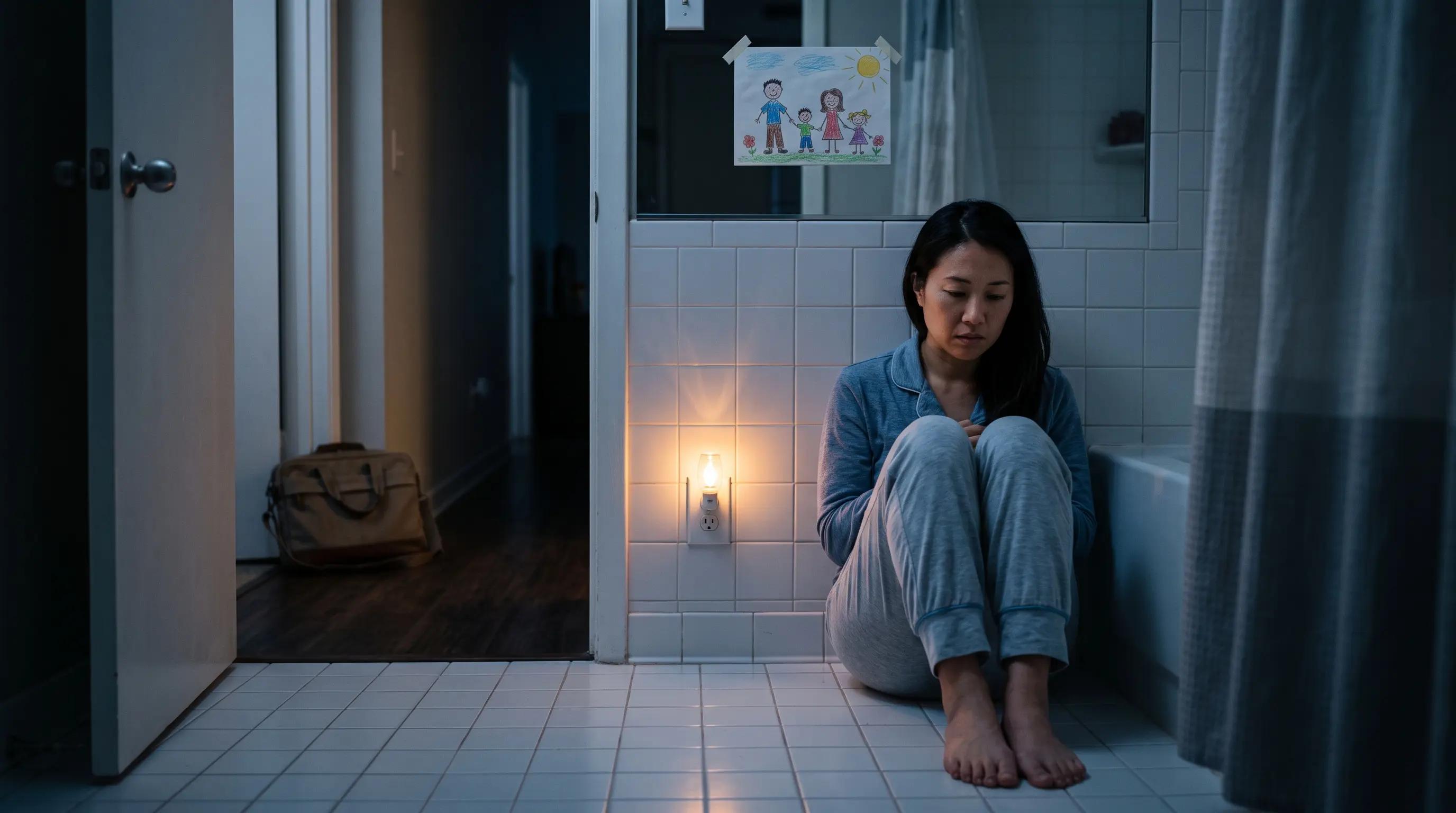
Maya had been promoted twice in three years. She raised her daughter alone without complaint. She answered emails before sunrise and after midnight. She never missed a deadline and never asked for help. By every visible measure — she was winning. Then one ordinary Monday morning she sat on the bathroom floor and couldn't think of a single reason to stand up. What happened next took everything she thought she knew about strength and quietly replaced it with something more honest.
He Couldn't Afford His Daughter's $12 School Lunch. That Night Changed Everything
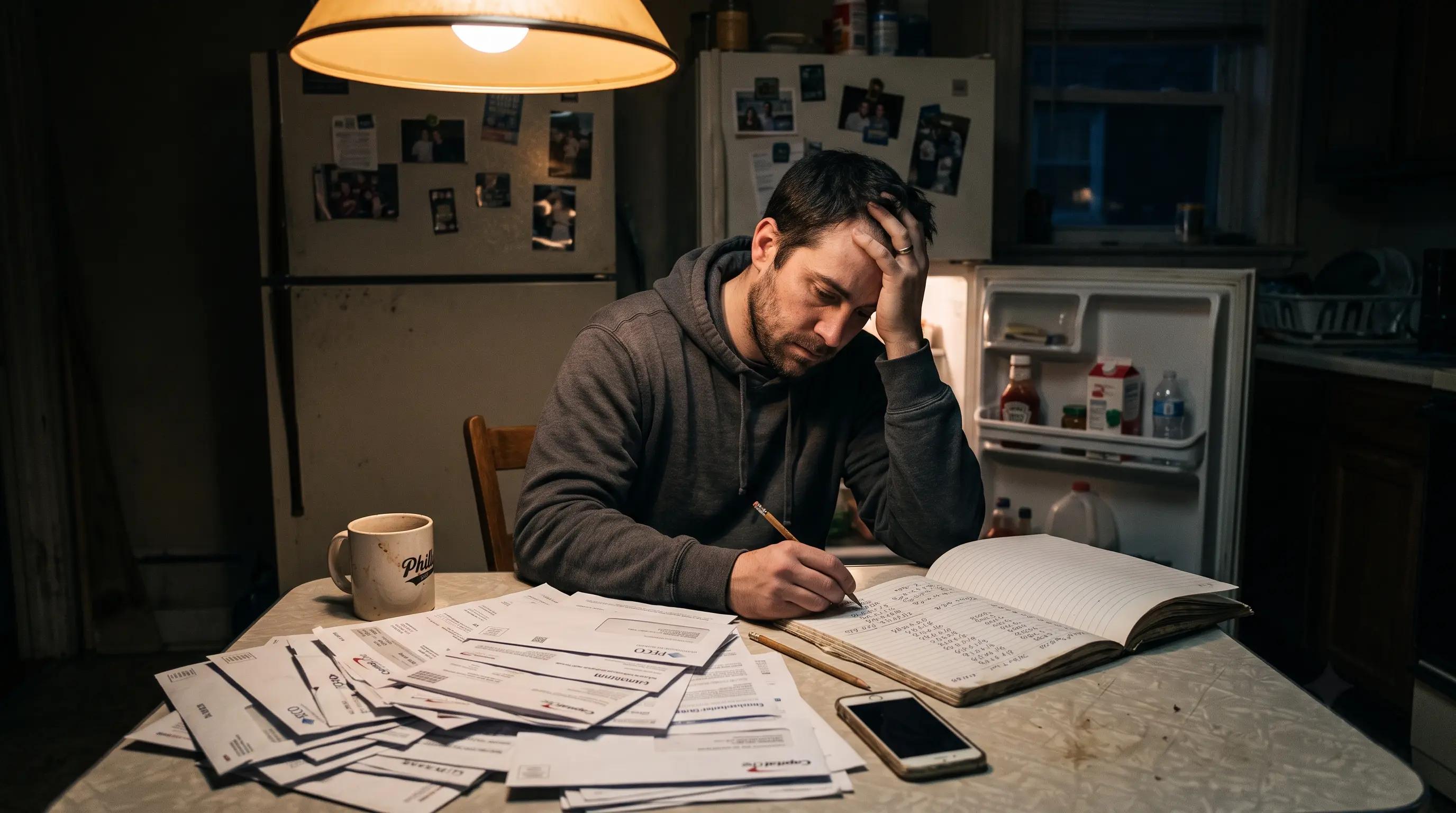
Grantham was a logistics coordinator with a steady paycheck, health insurance, and paid vacation. He was also the man who lied to his nine-year-old daughter about refilling her $12 school lunch account because his bank balance read $7.14. That night he spread every unopened envelope across his kitchen table. What he found was $50,287.16 in debt — and the first honest look at his own life he had taken in years.

What Would You Actually Miss?
Ethan Carter had worked nine years at the same warehouse, watched two promotions go to other people, and slowly stopped noticing anything around him. Then an inventory clerk named Margo started leaving half a sandwich on a napkin beside him without being asked. One morning she asked him a question he couldn't answer. He didn't know she had been carrying a secret the entire time.