
She Was Successful at Everything — Until the Morning She Couldn't Get Out of Bed
Story at a glance
“Maya had been promoted twice in three years. She raised her daughter alone without complaint. She answered emails before sunrise and after midnight. She never missed a deadline and never asked for help. By every visible measure — she was winning. Then one ordinary Monday morning she sat on the bathroom floor and couldn't think of a single reason to stand up. What happened next took everything she thought she knew about strength and quietly replaced it with something more honest.”
Share this story
The Kind of Tired That Sleep Doesn't Fix
Maya Chen woke at 5:47 a.m. on a Monday morning in March.
Her alarm hadn't gone off yet. It never needed to. Her body had learned to anticipate the day before the day arrived.
She lay still for a moment, staring at the ceiling.
Everything was fine. The mortgage was current. Her daughter Lily was healthy. Her performance reviews were excellent. Her manager trusted her. Her inbox was manageable — relatively speaking.
Nothing was wrong.
Which made it harder to explain why getting up felt impossible.
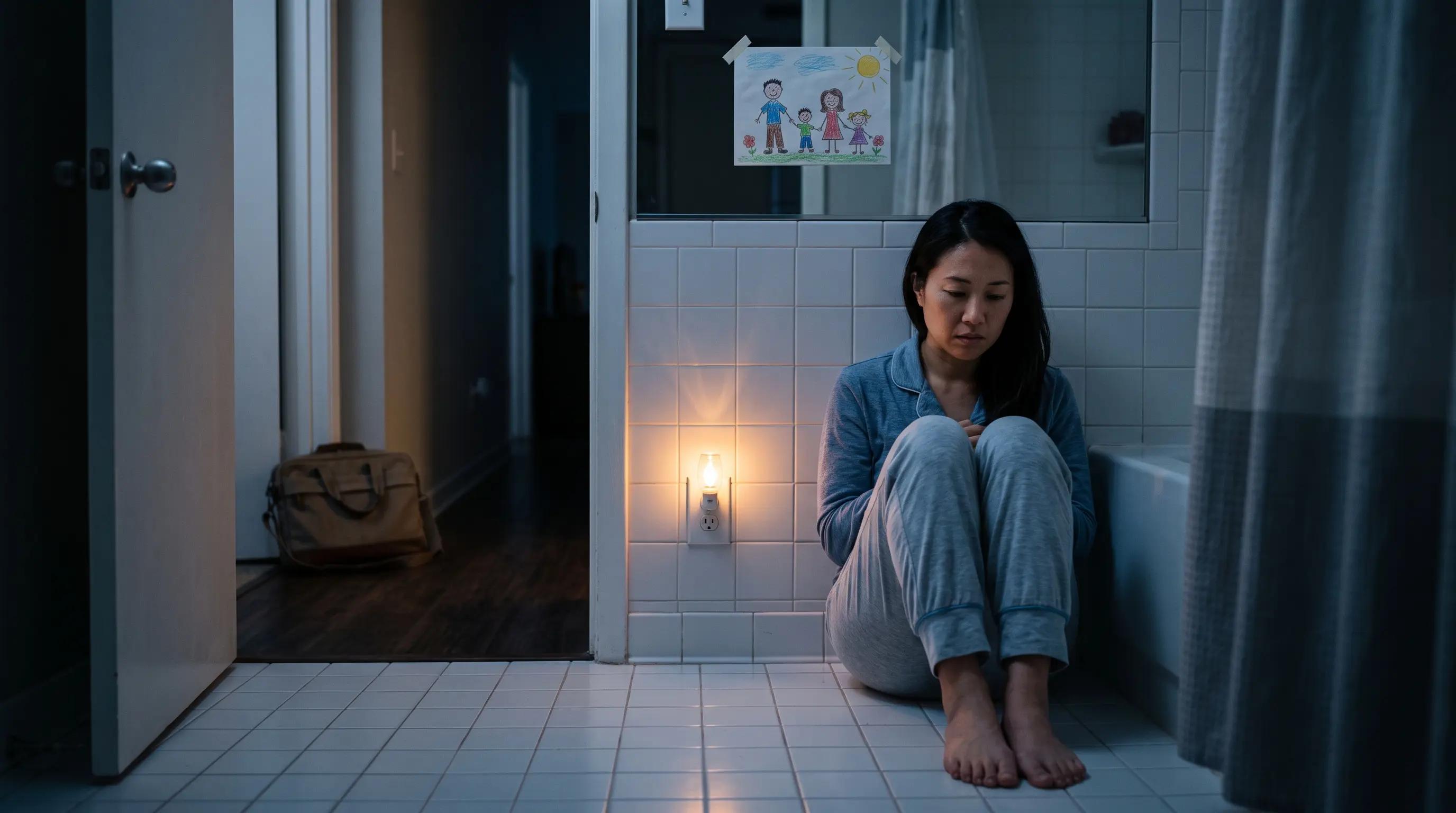
She made it as far as the bathroom.
Then she sat on the cool tile floor with her back against the wall, knees pulled to her chest, and simply stayed there.
Not crying. Not panicking.
Just — unable.
The feeling wasn't sadness. It wasn't anxiety. It was something quieter and harder to name. A specific kind of exhaustion that pressed down from the inside rather than the outside.
The kind of tired that sleep doesn't fix.
She had been ignoring it for months.
Today — it had finally decided to sit with her on the bathroom floor until she paid attention.
The Woman Everyone Admired
At thirty-four, Maya worked as a senior product manager for a healthcare technology company in Austin, Texas.
She had been promoted twice in three years. Her team respected her. Leadership trusted her with the company's most complex projects. Her manager described her as someone who "makes the impossible feel manageable."
Outside work, she was raising her seven-year-old daughter Lily alone after her marriage ended three years earlier.
She cooked dinner most nights. Attended every school event. Helped with homework. Read bedtime stories. Tucked Lily in with the same song every night.
Then she went back to her desk.
Because there was always more work waiting.
People asked how she managed everything. She always smiled the same way.
"You just figure it out."
She believed it. For years, she had been figuring it out.
What she hadn't noticed was the cost.
The signs had been there for a long time.
She stopped enjoying things she once loved. Books she used to finish in days now sat unopened for weeks. Friends invited her to dinner and she cancelled more than she went. She watched television without absorbing any of it.
Some evenings she put Lily to bed and then sat alone in the dark kitchen for twenty minutes without knowing why.
She told herself it was tiredness. Then she told herself it was the season. Then she told herself everyone felt this way.
None of those stories were completely true.
Work became a place she went through rather than engaged with.
She ran meetings efficiently. She made decisions quickly. She delivered results consistently.
But she had stopped caring about any of it.
Not outwardly. Her performance never slipped.
But inside — she was running on something that was no longer fuel.
She was running on momentum. The habit of being capable.
And momentum, unlike fuel, eventually runs out without warning.
Have you ever kept performing so well on the outside that nobody — including yourself — noticed how empty the inside had become? Maya wasn't struggling despite her success. She was struggling because of what maintaining it had quietly cost her. That distinction matters enormously and almost nobody talks about it.
The Longest Morning
She sat on the bathroom floor for nearly forty minutes.
Eventually she heard Lily's bedroom door open down the hall.
Small footsteps. A pause outside the bathroom.
"Mommy?"
Maya straightened. Cleared her throat.
"I'm here, sweetheart. Just getting ready."
She stood. Splashed water on her face. Looked in the mirror.
The woman looking back was familiar. Competent. Composed.
Completely exhausted.
She got Lily ready for school. Made breakfast. Drove the familiar route. Dropped her off with a hug that lasted a little longer than usual.
Then she drove to work.
Sat in the parking garage for eleven minutes.
Then walked in and led a 9:00 a.m. meeting as if nothing had happened.
Nobody noticed.
That was the most frightening part.
The Apology She Didn't Expect
Three weeks later, during a routine one-on-one with her colleague Priya, something unexpected happened.
Priya was one of the most composed people Maya knew. Organized, calm, and seemingly untouchable by stress.
Midway through their meeting, Priya set down her coffee.
"Can I ask you something personal?"
Maya frowned. "Of course."
"Are you okay? Not work-okay. Actually okay."
Maya opened her mouth. The automatic answer was already forming.
Then something stopped her.
Maybe it was the way Priya asked. Without judgment. Without advice waiting behind the question.
Just the question.
"I don't know," Maya said.
The room went quiet.
Then Priya nodded slowly.
"I cried in my car every Tuesday for three months last year."
Maya stared.
"I didn't tell anyone. I kept showing up. I kept delivering. And I kept thinking I was the only person this was happening to."
She looked directly at Maya.
"You're not the only person."
Maya didn't know what to say.
So she simply nodded.
And for the first time — she felt less alone inside something she had been carrying entirely by herself.
What She Had Been Calling Strength
That evening, Maya sat at her kitchen table after Lily was asleep.
She opened a notebook. Across the top of the first page she wrote one question.
What am I actually feeling?
She hadn't asked herself that question in years. There had never been time. There had always been a meeting or a deadline or a permission slip or a grocery list standing between her and the answer.
She started writing.
Not a plan. Not a solution. Just — honesty.
She was exhausted. She was lonely. She missed the version of herself who used to find joy in small things. She was angry at herself for not being able to just push through. She was sad without a specific reason. She was scared that this was simply what her life had become.
The page filled faster than she expected.
When she finished, she looked at what she had written.
For the first time — she wasn't describing a woman who had it together.
She was describing a woman who needed help.
And somehow — seeing it written down made it less terrifying than keeping it invisible.
The following morning she made two phone calls.
The first was to her doctor.
The second was to a therapist her sister had mentioned months earlier.
Neither call was easy. Both felt like admissions she wasn't ready to make.
She made them anyway.
Her therapist's name was Dr. Angela Torres. She was direct and warm and asked questions Maya had never been asked before.
"When you say you need to be strong — what would happen if you weren't?"
Maya had no answer.
"Who would be disappointed?"
She started listing names. Then stopped.
Because the first name on the list was her own.
She had been performing strength — not for her daughter, not for her team, not for her manager — but for a version of herself that believed rest was a form of failure.
Dr. Torres gave her one piece of homework after the first session.
"This week — do one thing that has no purpose except that it makes you feel like yourself."
Maya sat with that for three days before she understood what it meant.
The Trail
On Saturday morning, while Lily was at her father's house, Maya drove to a hiking trail outside Austin.
She had driven past it dozens of times. She had never stopped.
The trail wasn't impressive. Not scenic in the dramatic way. Just cedar trees and limestone and quiet.
She walked for ninety minutes without a podcast. Without music. Without checking her phone.
About forty minutes in — her mind went quiet.
Not empty. But quiet.
The constant running commentary — the deadlines, the to-do lists, the things she hadn't finished and should have done differently — went temporarily still.
She stopped beside a small creek.
Listened to the water.
She couldn't remember the last time she had listened to something without simultaneously thinking about something else.
The feeling was so unfamiliar it almost made her cry.
Not from sadness. From recognition.
"Oh," she thought. "There I am."
Learning to Rest Without Guilt
The hardest part of recovery wasn't the therapy.
It wasn't setting boundaries at work. It wasn't learning to say no.
It was giving herself permission to rest without immediately trying to justify the rest with productivity.
Her whole life had been organized around output. Rest had always been the thing she did after she had earned it. The vacation at the end of the year. The sleep she'd catch up on the weekend. The break she'd allow herself once this project finished.
She had been treating rest like a reward.
Dr. Torres said something in their third session that Maya wrote in her notebook and returned to often.
"Rest is not a reward for finishing. Rest is a requirement for continuing."
Maya had always known this intellectually.
She had never allowed herself to believe it personally.
Small changes arrived slowly.
She started protecting her lunch hour — not every day, but several times a week. Sometimes she walked. Sometimes she simply sat outside with her coffee and nothing else.
She started leaving work at a reasonable hour two or three days a week. The first few times felt almost physically uncomfortable. The projects didn't collapse. The deadlines held.
She started cooking on Sundays again. Not elaborate meals. Just the process of chopping vegetables and listening to music and being in her kitchen without a screen in her hand.
One Friday evening she put Lily to bed and then sat in the dark kitchen.
But this time — she noticed it.
Instead of getting up and returning to her laptop, she simply let herself sit for a moment.
Then she made chamomile tea. Opened a book she hadn't touched in months. Read twelve pages.
It wasn't enough to fix anything.
But it was enough to remember that she existed outside of her productivity.
The Conversation She Almost Didn't Have
Two months after the bathroom floor morning, Maya had a scheduled review with her manager.
She had prepared carefully. Numbers. Outcomes. Contributions.
Then her manager asked something she hadn't expected.
"How are you doing — outside the metrics?"
A year earlier, Maya would have said fine without pausing.
Instead — she told a small piece of the truth.
"I've been managing burnout. I'm working on it. And I've realized some of my boundaries need to change."
Her manager was quiet for a moment.
Then she said, "Thank you for telling me."
Not — we'll need to discuss your performance. Not — that can't affect your deliverables.
Just — thank you for telling me.
And then, more quietly, "I've been there too."
Maya drove home wondering how many conversations like this weren't happening in offices everywhere.
People performing fine while quietly unraveling.
Believing they were alone.
What Changed and What Stayed
Six months after sitting on the bathroom floor, Maya's life didn't look dramatically different from the outside.
She still worked hard. She was still promoted. She still showed up for Lily every morning and every night.
But something fundamental had shifted inside.
She no longer believed that her worth was determined by how much she could carry without asking for help.
She no longer treated rest as something she had to earn.
She had stopped confusing endurance with strength.
Because real strength, she had finally learned, was not the ability to keep going no matter what.
Real strength was knowing when to stop. When to ask. When to rest.
And beginning again with more honesty than before.
One year after the bathroom floor morning, Maya found herself in a coffee shop near her office.
Priya sat across from her.
"You seem different," Priya said.
"Different how?"
Priya smiled. "Lighter."
Maya thought about it.
"I think I stopped trying to convince everyone I was fine."
"What did you start doing instead?"
Maya looked toward the window.
"Actually being fine."
Before You Go
Burnout rarely announces itself.
It arrives quietly. In the book you stopped finishing. In the dinner invitation you keep declining. In the twenty minutes you sit alone in a dark kitchen without knowing why.
It looks like tiredness. Then it looks like irritability. Then it looks like not caring about things you used to love.
And still — most people keep going.
Because rest feels like surrender. Because asking for help feels like weakness. Because showing any crack in the surface feels dangerous when people depend on you.
But there is a version of strength that is not about endurance.
It is about honesty.
It is about saying — out loud, to someone — I am not fine.
And then letting that be the beginning of something.
You do not have to earn the right to rest.
You do not have to perform strength until there is nothing left.
You are allowed to need help.
And needing help is not the end of being capable.
It is often the beginning of becoming more genuinely capable than you have ever been.
Rest is not a reward for finishing.
It is a requirement for continuing.
And you — with everything you are carrying — deserve to continue.
Did this story reach something you have been ignoring? Share it with someone who needs permission to stop performing fine.
Every story matters
Real stories like this one remind us that no matter how difficult life gets, people find a way through. If this story moved you, share it — you never know who needs to read it today.
Share this story
More in Single Parent Stories
You might also like
He Couldn't Afford His Daughter's $12 School Lunch. That Night Changed Everything
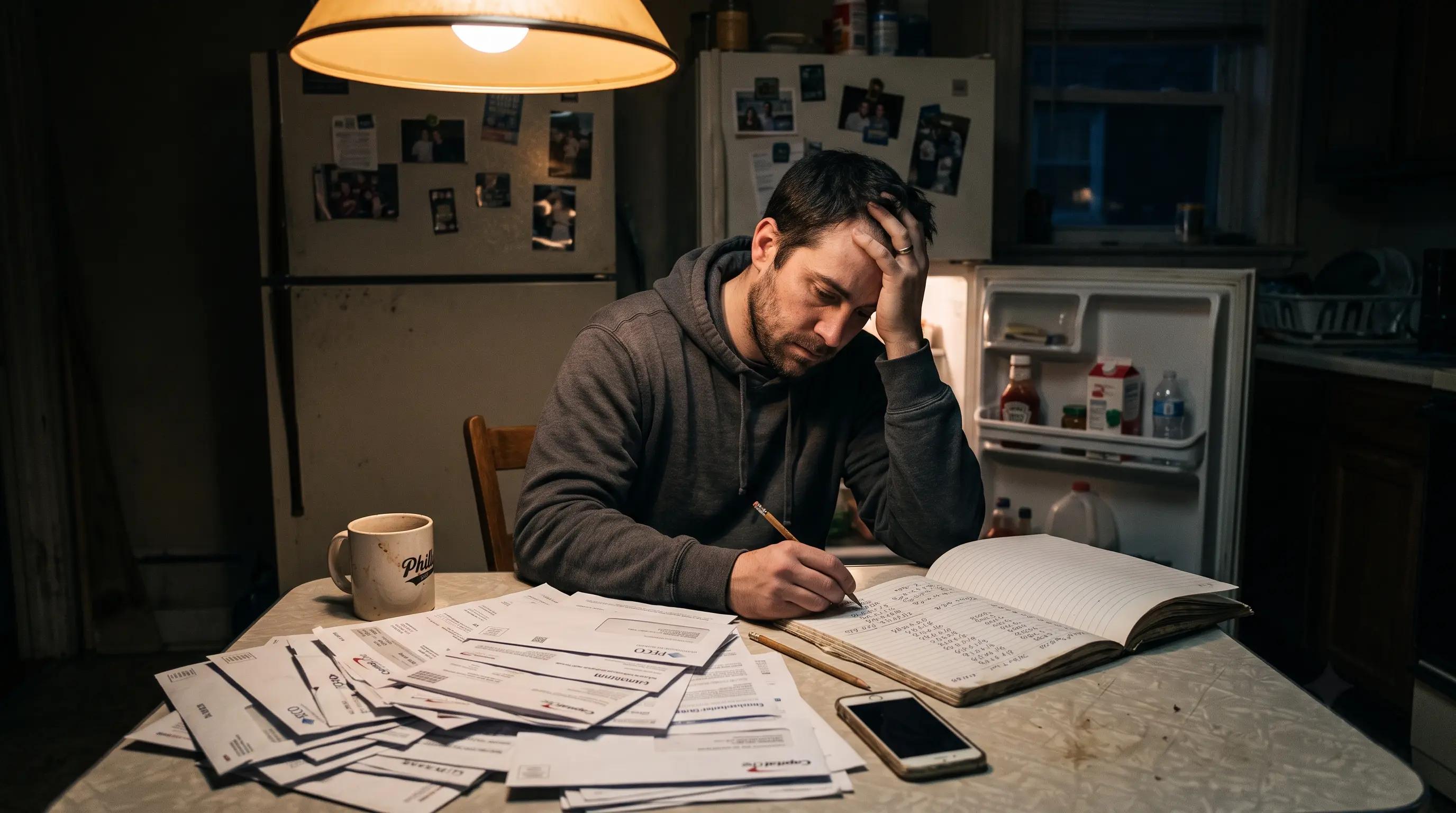
Grantham was a logistics coordinator with a steady paycheck, health insurance, and paid vacation. He was also the man who lied to his nine-year-old daughter about refilling her $12 school lunch account because his bank balance read $7.14. That night he spread every unopened envelope across his kitchen table. What he found was $50,287.16 in debt — and the first honest look at his own life he had taken in years.

What Would You Actually Miss?
Ethan Carter had worked nine years at the same warehouse, watched two promotions go to other people, and slowly stopped noticing anything around him. Then an inventory clerk named Margo started leaving half a sandwich on a napkin beside him without being asked. One morning she asked him a question he couldn't answer. He didn't know she had been carrying a secret the entire time.
She Tried to Be the Perfect Mom, Until One Morning Everything Fell Apart
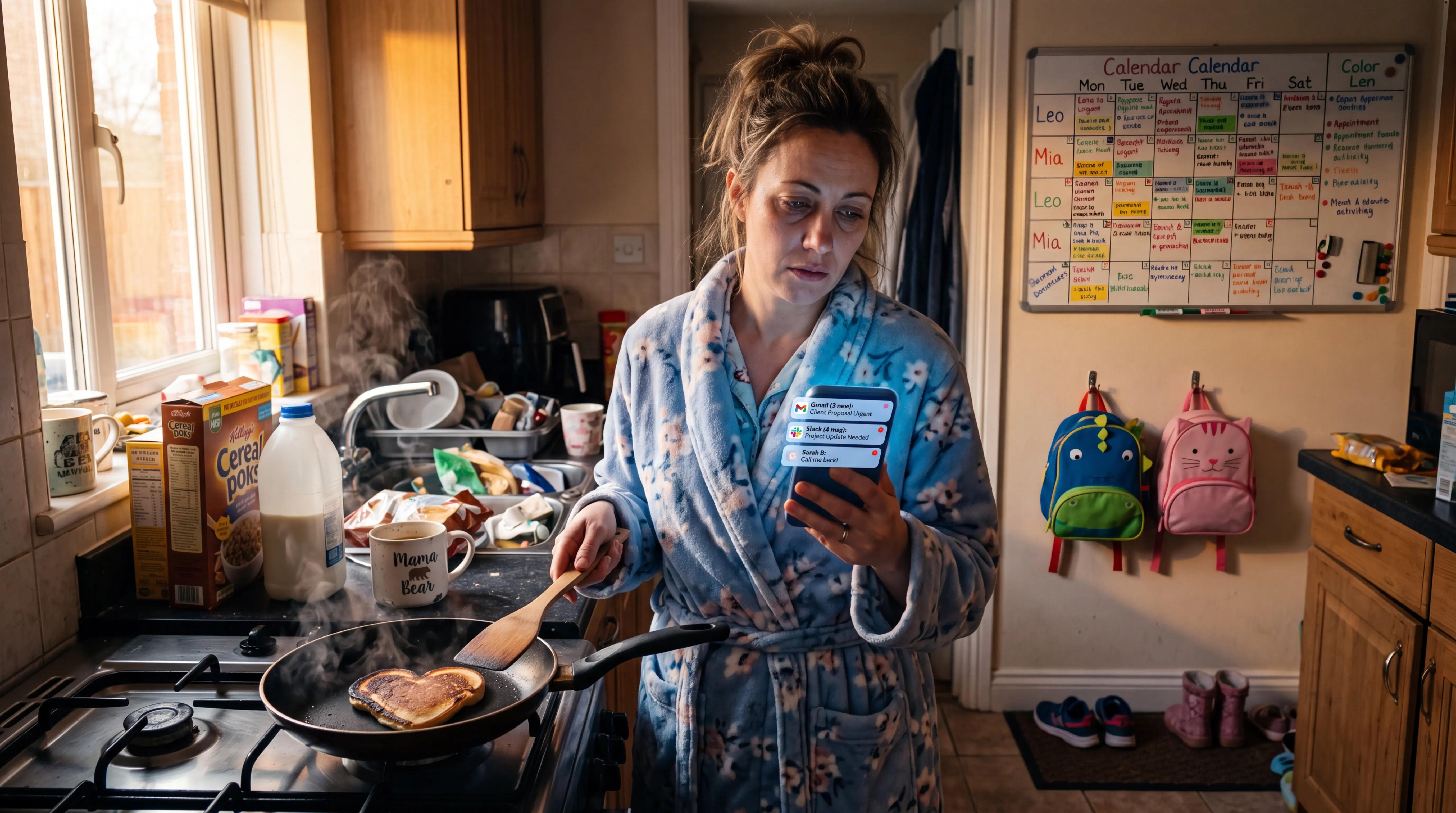
Harper Mitchell never missed Pancake Tuesday. She answered emails before her feet touched the floor. She color-coded every hour of her life on a whiteboard in her kitchen. She was the person everyone called when things went wrong. Then her seven-year-old son told his teacher he was afraid of making her upset, and everything she believed about being a good mother quietly fell apart.