
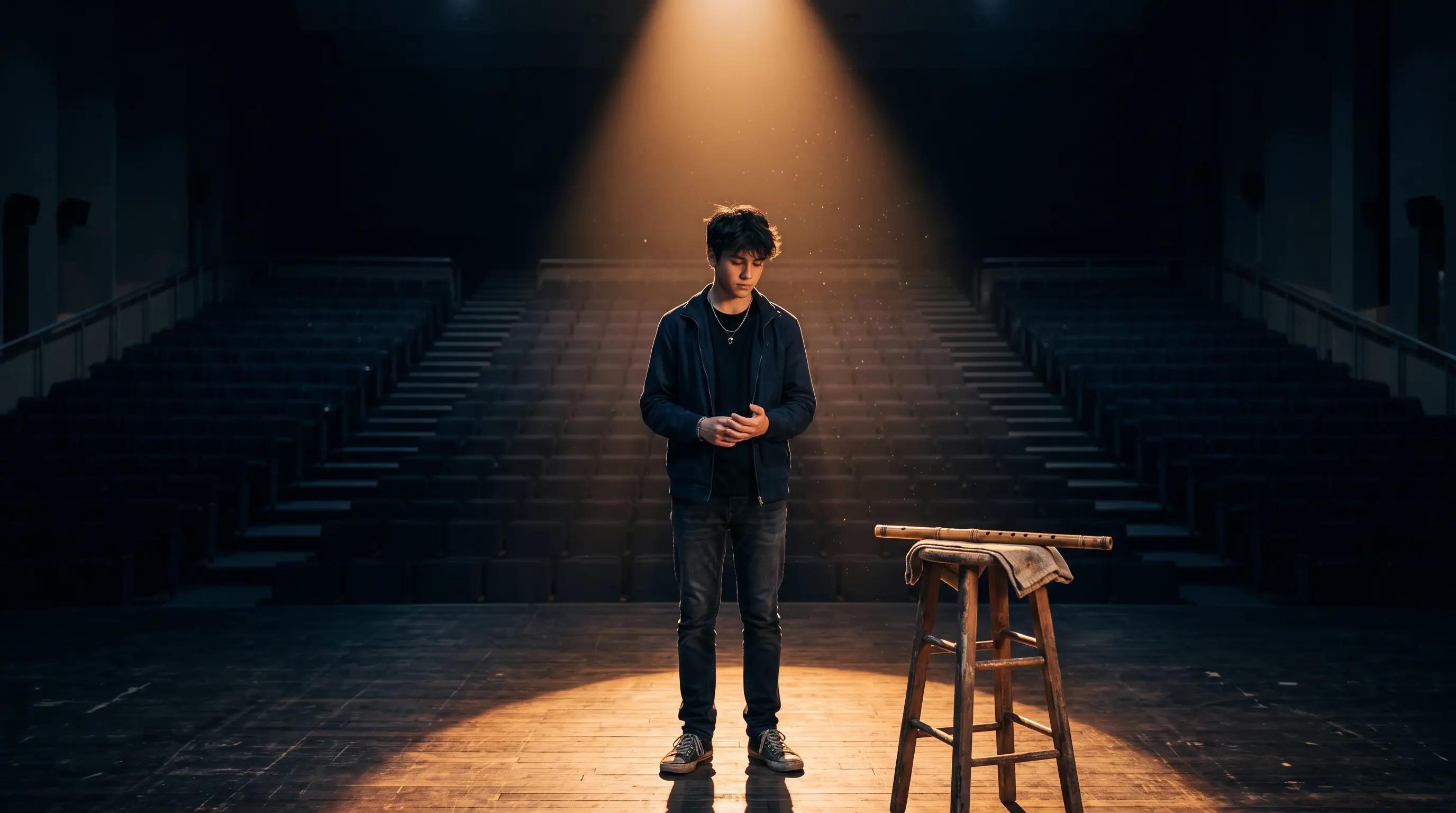
Repairs While You Wait
Story at a glance
“An instrument repairer in a Welsh village has forty minutes to wait for the glue to set, a teenage singer in his shop, and a cracked flute on the shelf he would rather not explain.”
Share this story
The sign in the window says REPAIRS WHILE YOU WAIT, and in forty-one years nobody has ever waited. They leave the thing on the counter, say they'll pop back, and collect it a fortnight later with an apology. So I was surprised when the old woman sat down on the customer stool and took her glasses off to clean them, as if she meant it.
The morning had gone on the usual lines. A Dutch couple with a ukulele they'd sat on. Mr Gethin from the brass band, wanting the dent taken out of the euphonium for the third time, which can't be done, but he pays me in Welsh cakes and so I try. At eleven I was alone with a cello bridge and a cup of tea going cold on the lathe.
It was a Thursday in October, raining the way it does in Betws-y-Coed, from every direction at once. The bell went and in came Mrs Pritchard from up the valley, whom I've known since she bought her husband a trumpet, and behind her a lanky boy of seventeen or so with his hood up and his hands in his sleeves.
"Emrys," she said. "Violin. The neck's come away from the body. His great-grandfather's. Can it be done?"
I took it out of the case. The seam had opened along the top block, clean, the way old hide glue does when a house gets damp. I told her it could be done and that it would take an hour for the glue to grip. She said, "Then we'll wait," and the boy sighed through his nose.
While I worked she told me about Idris, her husband, who played cornet in the village band for thirty years and was never once on the right note at the same time as anyone else. The trumpet I'd sold him was for his seventieth. He'd practised for a week and put it back in its case and said it was a young man's instrument, and she said she'd never loved him more. Hide glue is a good thing to work with when someone's talking. You can't hurry it. You warm it, you watch it, and you have perhaps ninety seconds before it starts to grab.
The boy's name is Rhys. I'd heard about him. Half the village had heard about him, which is a thing that happens here. Three years he'd been training for the Snowdonia Young Voices, and at the rehearsal in the chapel hall, eight days before, his voice had cracked on the top note in front of forty people. Someone had laughed. There's always one.
I didn't mention any of it. I warmed the pot of glue and cleaned the old joint with a scalpel, and Mrs Pritchard talked about her knee.
Rhys wandered. They always do, in a repair shop. He picked up a bow and put it down. He looked at the tuning forks, at the ukulele with the snapped neck, at the euphonium with the dent in it. Then he stopped at the shelf behind the counter and said, "That one's broken."
He meant the flute. It's bamboo, a foot and a half long, with a crack that runs from the third hole nearly to the foot.
"It is," I said.
"Why's it up there, then?"
I didn't answer straight away, because I was lining the neck up against the button, and it matters. When I'd clamped it I said, "I made it when I was nineteen. I cracked it in your chapel hall, as it happens. Cold night, damp bamboo, a high note. Bamboo moves, you see. It doesn't tell you beforehand."
I didn't tell him the rest. After that night I never played in front of an audience again. I carried on making instruments instead, which is easier, because a violin will never look at you from the third row. People have called that a waste. I've made two hundred and eleven fiddles and I've never once thought so.
"Does it still play?"
I took it down, wiped the mouthpiece on my apron and played him three notes. The first was fine. The second buzzed like a wasp in a jar. The third came out with a thread of air running down the side of it, rough and warm, and I'll admit I held it longer than I needed to.
Rhys didn't say anything. His grandmother, behind him, had put her glasses back on and was looking very hard at a price list.
"Why keep it?" he said.
"Haven't got round to making another."
That was true, and it was also all I was going to say, and he seemed to understand that, because he nodded and went back to the shelf.
The glue needed forty minutes more. I went into the back for string and left the door ajar, and I heard it begin. He wasn't singing, exactly. He was humming under his breath, the way you do when you think the room is empty. It was Calon Lân, which every child in this valley learns before they learn to read, and he was doing the second verse well enough. When he reached the line where it climbs, the note went up, thinned, and split, a small clean break, like a plate with a chip taken out of it.
He stopped. I stood perfectly still in the back with a packet of E strings.
A second went by, maybe two. Then he picked the tune up again from the next line, quieter, and carried on to the end.
I kept my back to the doorway until I heard the stool creak.
When the clamps came off, the neck held. I tuned the violin up slowly, a little each minute, so the new joint wouldn't be shocked, and played the open strings for Mrs Pritchard. She counted out thirty-five pounds from a purse with a clasp and told me I was a good man, which I'm not particularly, and then she put her arm through the boy's and they went out into the rain.
On the way past the window Rhys stopped. The poster is taped up there between the church fete and the lost-cat notice. Snowdonia Young Voices, Saturday week, chapel hall, entries close Friday. He looked at it the way you look at a bill you've been meaning to open.
Then his grandmother said something I couldn't hear and they were gone up the road.
I put the flute back on its shelf. The shop was very quiet, the way it is after anyone leaves, and the rain was easing.
I didn't say it, and I've wondered since whether I should have. After that night in the chapel hall I never played in front of anyone again, and for forty years I have told myself it was my choice. It wasn't. I was frightened of the sound a crack makes. I would have liked to tell a seventeen-year-old that a crack is only a crack, but there are things you can say to a boy and things you can only leave on a shelf where he'll see them.
Entries close Friday. I'll be here on Friday. I'll be here on Saturday too, I expect, with the sign turned round, because the chapel hall is two minutes' walk and I haven't been inside it since the night the bamboo split. I hear they've changed the lights.
Every story matters
Stories like this one remind us that no matter how difficult life gets, there is always a way through. If this story moved you, share it — you never know who needs to read it today.
Share this story
More in Dreams & Second Chances
You might also like
One Hour a Night
After his manager's heart attack, an accountant in the Waikato finds his old architecture drawings and decides to draw for one hour a night. A year later he is designing a shed door.
One More Letter
A single mother in Seattle writes a children's book about a detective sock puppet, collects thirty-one rejections, and finally finds a small publisher.