

One Trash Bag
Story at a glance
“Emily leaves her husband in the middle of the night with her fourteen-year-old son and one trash bag. The story follows them to her mother's farm, a market stall, and a bakery of their own.”
Share this story
Emily Harper packed one black trash bag on a Tuesday night in October, while her husband slept off the whiskey with one arm hanging over the edge of the mattress. She left the bedroom door open a hand's width so that the hall light wouldn't wake him. She took two pairs of jeans, three shirts, her son's gray hoodie and a baseball glove, and she folded each thing, because folding is silent.
She had lived in that house for twenty years. People who haven't lived it tend to picture a man who hits every day. Brandon didn't. There were weeks when nothing happened at all, and then a night, and then a bruise on her upper arm the color of an old plum, and then a stretch of him being so sorry that she started apologizing first. Somewhere in that rhythm she had stopped being able to tell what she thought. The packing was the first thing in a long time that she had decided by herself.
Her son Noah was fourteen. He was waiting at the front door with his backpack on one shoulder and his hands deep in his coat pockets. Over the past year he had stopped asking for things. No more birthday wishes, no friends over, no pizza on Fridays. He had worked out that asking was how arguments started, and a boy shouldn't have to work that out. "We're going to Grandma Rose's for a while," Emily said, and watched him try to decide whether a while meant a weekend or meant ever.
He reached for the bag. "I can carry it." It was not the bruise or the things Brandon said that nearly undid her. It was her son's hand on that bin liner, trying to take the weight. She took it back and said, "I've got it," and was surprised to find that she did.
Grandma Rose lived three hours away in a farming town outside Springfield, Missouri. They drove through the rain with the wipers going, and neither of them said much. Somewhere past a gas station with one working pump Noah asked, to the window, "Are we going back?" "I don't know," Emily said. It was the first completely honest answer she had given anyone in years, and she felt the car go quiet around it.
In her purse was a manila envelope she had been filling for four months. It held photographs she had taken on her phone, a doctor's note, and printouts of texts she had copied at the public library during her lunch breaks, a few pages at a time so the librarian wouldn't ask. A number for legal aid was written on the flap in pencil. She hoped she'd never need it, and carrying it made her feel a little less alone.
The porch light was on when they pulled in. Rose came out with an umbrella, seventy-four and smaller than Emily remembered, in the same blue apron. She didn't ask a single question. She held her daughter for a long time, and then she held a hand out to her grandson, palm up, the way you approach a nervous dog. After a minute Noah took it.
At night Emily lay on the pull-out couch and listened to him come down the stairs to check the front door. Once, twice, sometimes three times, and then back up. She never told him to stop. He wasn't checking the lock. In the second week a text arrived from Brandon: You'll be back. You always come back. She read it twice, took a screenshot and sent it to the lawyer at legal aid. Then she went outside and weeded the carrots with her mother for two hours without either of them saying much.
A week after they arrived she woke at five to the smell of bread and found Rose already at the counter. Rose passed her a bowl. "Your hands need a job," she said. Emily had not baked anything harder than boxed brownies in years. Brandon used to say she wrecked every meal she touched, and she had stopped trying. The dough fought her. It stuck to her wrists and flour went up her sleeves. Rose looked over and said, "Wash your hands more often than you think you need to," which was all the advice she gave that morning. Emily laughed, and it surprised them both.
Rose sold her bread on Saturdays at a farmers' market half an hour away. It earned enough for groceries and not much more. That first Saturday Emily stacked loaves while Noah hauled coolers, and the first customer, an old man in a feed cap, bought two sourdoughs and said it was the best bread he'd had since his wife died. By noon the table was bare.
By spring Noah knew the regulars by name. Mrs. Jenkins took rye. Coach Miller never left without two blueberry muffins. A small girl called Tori would only have the cookie shaped like a butterfly. Another child once pressed a drawing into his hand, a loaf of bread with a face, and Noah looked at it for a long time and then smiled the way he used to, all at once. Emily saw it from across the stall and said nothing.
That summer, long after midnight, she was at the kitchen table with a pile of bills when she heard him in the doorway. He was holding a peanut butter jar full of folded notes and coins. "My tips," he said. "For the electric." She took his hands instead of the jar. "What I need," she said, "is for you to be fourteen." He didn't answer, and after a while he leaned his whole weight against her shoulder, which he had not done in a year.
A café owner stopped at the stall one Saturday and asked if she'd thought of selling wholesale. Emily laughed and said she could barely keep up as it was. He said people kept asking him where to get good local bread, and he'd rather send them to her than to a supplier in Kansas City. She rented time in the kitchen of the Methodist church on Elm Street, hired a girl called Josie to bag and label, and had cards printed. Harper Family Bakery. It was the first time in her adult life that her own name had been on a card.
The following October the old blue Ford with the dent in the tailgate came up the drive. Emily knew the sound of the engine before she saw it, and her hands went cold. Noah appeared beside her and put two fingers lightly on her sleeve. Rose stood in the doorway with her phone already in her hand. Brandon got out smiling the smile she had believed for twenty years. "Em," he said. "This has gone on long enough. Come home."
"I am home," she said. She told him plainly, because her voice shook too much for anything cleverer, that the protective order had been signed the day before, that a copy was in his mailbox at the old address, and that if he didn't leave Rose would call the sheriff's office, whose number was written on the refrigerator. He stood as if he might argue. Then he got back in the truck.
When the dust had settled Emily sat down on the porch step because her legs had decided for her. Rose brought tea in a mug with a chipped handle and didn't say anything. Noah sat on her other side with his arm pressed against hers.
The bakery grew slowly, the way a sourdough starter does. On Saturdays people line up before sunrise. Each loaf goes out with a small paper tag with the bakery's name on it, and Josie ties them on with string. The black bin liner is still at Rose's, folded in four, in the pantry drawer with the rubber bands and spare string. Emily has never thrown it out. It reminds her that she left with almost nothing, and that it was enough to begin with.
Every story matters
Stories like this one remind us that no matter how difficult life gets, there is always a way through. If this story moved you, share it — you never know who needs to read it today.
Share this story
More in Family & Parenting
You might also like
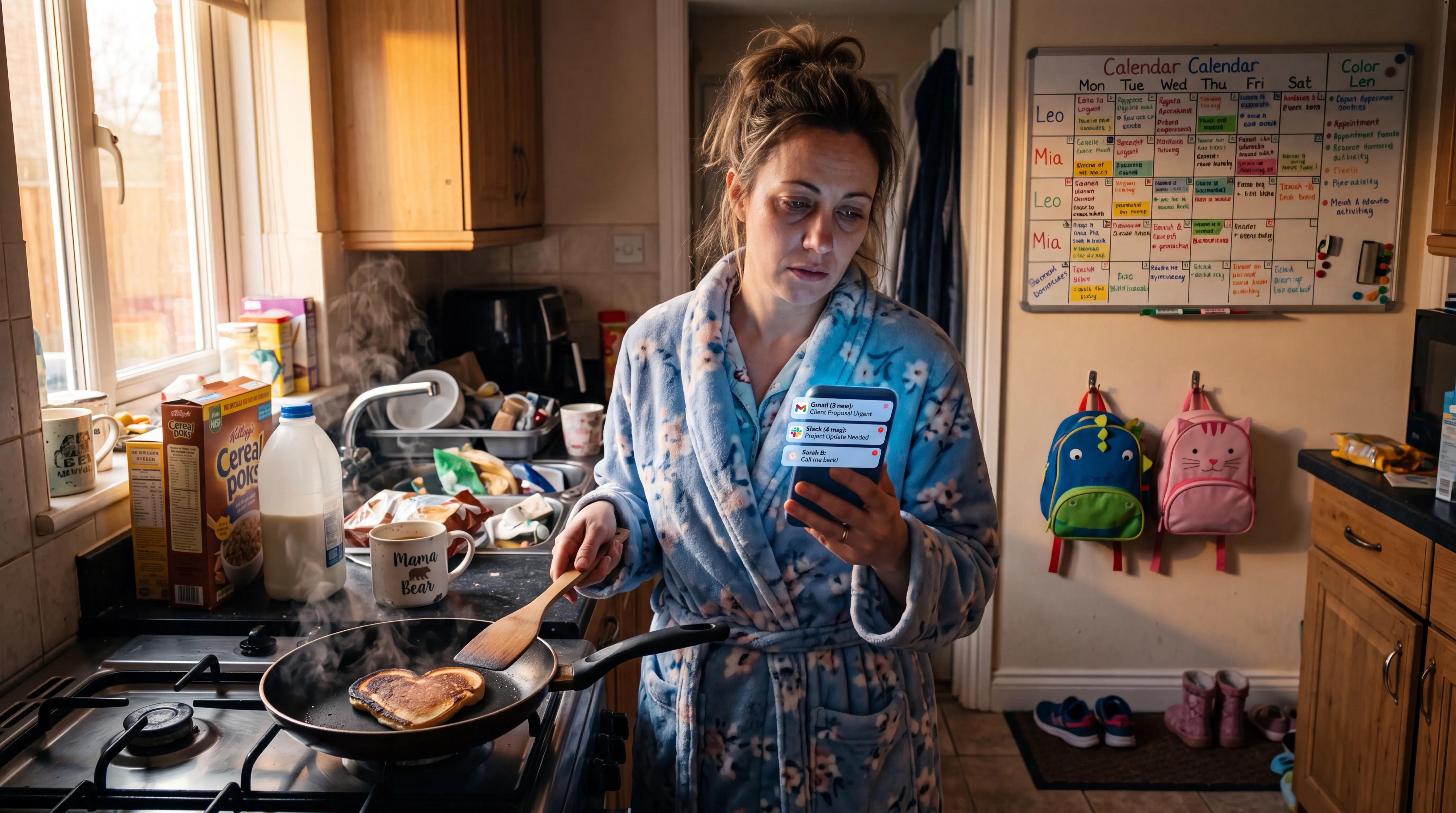
The Burnt Heart-Shaped Pancake
A seven-year-old in Bristol tells the story of the Tuesday his mother burned the pancake, and of the weeks after, when she learned to let some things go undone.

Someone I Admire
A Grade 7 student writes her school essay about her father, who builds furniture in the garage before sunrise while the family wonders whether it will ever pay.