
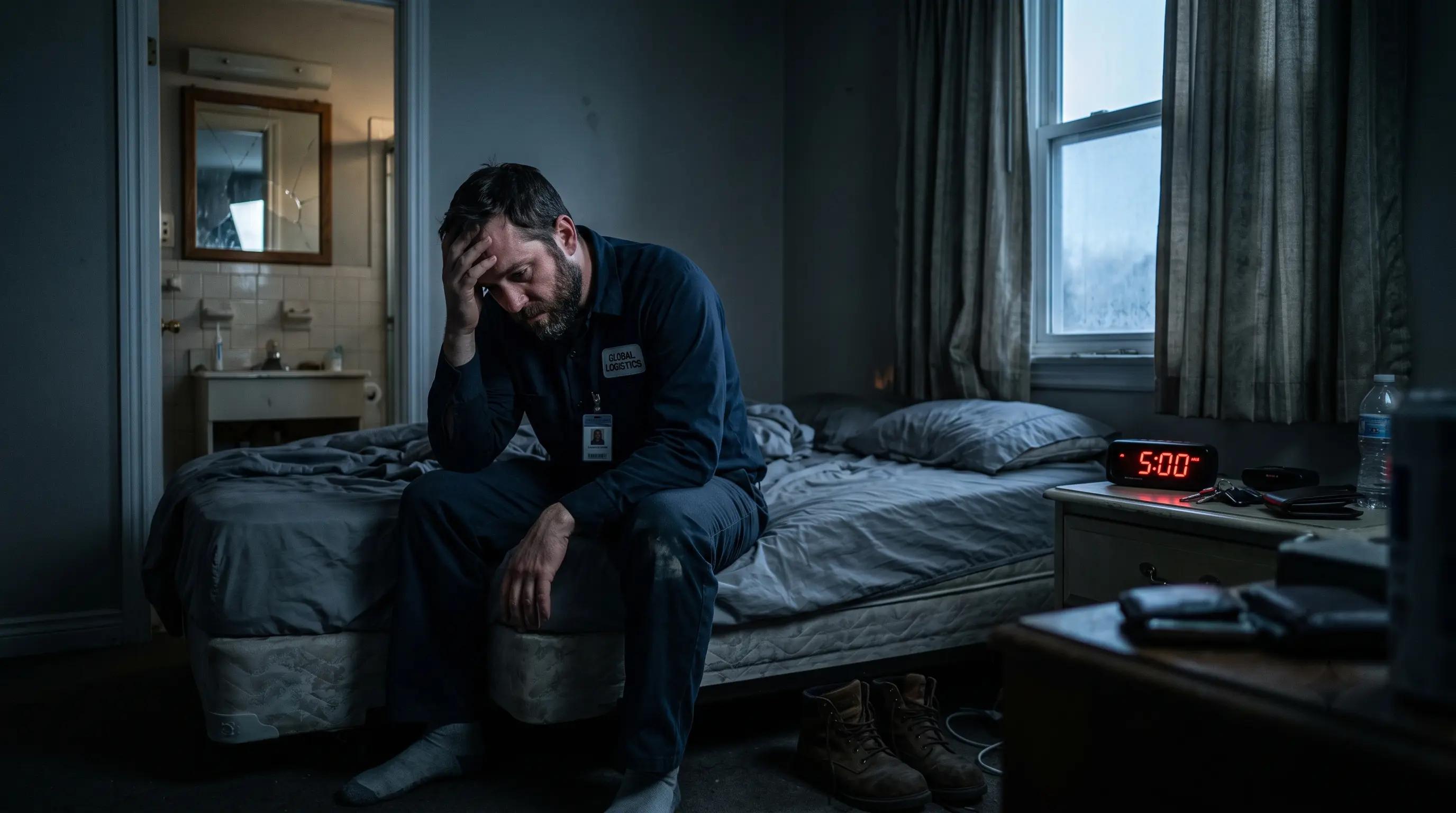
The 5 A.M. Decision That Changed His Life
Story at a glance
“Have you ever been so tired that your dreams started to feel embarrassing? Marcus Reed worked nights on a forklift for years, watching his life stay exactly the same. Then a stranger on a bus asked him one question he couldn't shake — and it quietly changed everything.”
Share this story
The Tired Man Who Stopped Dreaming
Marcus Reed was 36 years old and worked nights at a logistics warehouse outside Columbus, Ohio.
From 8:00 p.m. to 6:00 a.m., he drove a forklift between endless shelves of boxes.
Lift.
Turn.
Reverse.
Scan.
Repeat.
Ten hours a night. Five nights a week. Sometimes six.
By the time his shift ended, the world was waking up, and Marcus felt like he was fading out of it.
He lived alone in a small apartment above a laundromat that never completely slept. Even during the day, a low mechanical rumble came through the floor.
His mattress sagged in the middle. The kitchen faucet leaked unless he twisted it hard. A thin crack ran across the bathroom mirror, and every morning he looked at it while brushing his teeth.
Things don't break all at once, he thought.
They break slowly.
Marcus had been married once. Now he sent child support at the beginning of every month and carefully decided which bill could wait.
His son, Eli, was eight years old, full of questions and energy.
One Saturday afternoon they shared a cheap pepperoni pizza at Marcus's tiny kitchen table.
Eli looked at him for a moment and asked, "Dad, why are you always tired?"
Marcus smiled automatically. "I work nights, buddy."
But after Eli left, the question stayed in the apartment long after the silence returned.
Why am I always tired?
It wasn't just the schedule. It was the feeling that his life had stopped growing.
Work. Sleep. Work. Sleep. A little hope. A lot of repetition.
Not Management Material
The real turning point did not begin with motivation.
It began with humiliation.
One Tuesday evening, before his shift, Marcus sat in a small gray office under a buzzing fluorescent light. He had applied for an internal promotion: Shift Supervisor.
He knew the warehouse better than almost anyone. He trained new employees. He covered extra shifts. He rarely complained.
The manager folded his hands. "Marcus, you're one of our most reliable employees."
Marcus felt a small spark of hope.
"But this role requires stronger computer and reporting skills. Inventory systems, scheduling software, data tracking. You're excellent in operations, but you're not quite management material."
Not management material.
Marcus nodded as if he understood.
Inside, something went silent.
Later that night he watched a younger employee — someone Marcus had personally trained — walk the warehouse floor with a new badge and a clipboard.
Marcus climbed back into his forklift.
Reliable. Hardworking. Replaceable.
Mom Collapsed
At 4:45 a.m., during his break, his phone buzzed. A text from his ex-wife.
You're late again. I can't keep covering for you.
He closed his eyes.
Twenty minutes later, his phone rang again. It was his sister.
"Marcus, Mom collapsed."
His stomach dropped.
"She's stable," his sister said quickly. "Stress and exhaustion. She's been skipping some of her medication because it's getting expensive."
After his shift, Marcus didn't go home. He took a bus to the small town where his mother lived.
Three hours later he stood beside her hospital bed. She looked smaller than he remembered.
"I didn't want to worry you," she whispered.
He held her hand. Her fingers felt thin and fragile.
"I'm fine," she said softly. "Just tired."
Tired.
The word hit differently now.
When Do You Work On Your Life?
After she fell asleep, Marcus stepped outside the clinic.
It was just after five in the morning. The sky was pale blue. Cold air stung his face. A few farmers were already walking toward their fields.
The world was moving.
He wasn't crying. He wasn't making dramatic promises. He was calculating.
If I don't change something, this is my ceiling.
Ten more years of forklifts. Ten more years of explaining why I'm exhausted. Ten more years of saying maybe next year.
That thought drained him more than the night shift ever had.
On the bus ride back to Columbus, a man sat across from him. Late fifties. Work boots. Broad shoulders. Hands that looked like they had built things.
Marcus recognized him from around town. Robert Hale, owner of several hardware stores. Not flashy. Just steady.
Robert looked up from his book. "You look like a man who hasn't slept," he said.
"Night shift."
Robert nodded. Then he asked a question Marcus had never heard before.
"And when do you work on your life?"
Marcus frowned. "What do you mean?"
Robert closed the book. "You work for money all night. When do you work for yourself?"
Marcus almost laughed. "I don't have that luxury."
Robert didn't argue. "How old are you?"
"Thirty-six."
"And how many years have you been saying you don't have time?"
Marcus had no answer.
Robert leaned forward slightly. "You don't lack ambition," he said. "You lack ownership of your hours."
That sentence felt different.
Not an insult.
A mirror.
Own Your Mornings
"My schedule is fixed," Marcus said. "I get home, I sleep, I go back to work."
"Then change it."
"I can't survive without sleep."
"I didn't say sleep less," Robert replied calmly. "I said decide when you sleep."
Marcus stared at him.
Robert continued. "For ninety days, give yourself two hours every morning. Not for social media. Not for motivation videos. For a skill that makes you more valuable."
Marcus felt resistance rise immediately. "And if nothing changes?"
Robert met his eyes. "Then I'll admit I was wrong."
The bus began to slow.
Before Marcus stood up, Robert added one final sentence.
"If you don't control your mornings, your circumstances will."
Marcus stepped off the bus into the early light.
For the first time in years, he did not feel inspired.
He felt challenged.
And something inside him — small, stubborn, and slightly angry — decided to try.
The next morning, Marcus set his alarm for 5:00 a.m.
Not because he suddenly believed in himself.
He set it because he was tired of proving himself right about why nothing ever changed.
And that was the moment his life quietly began to turn.
Have you ever needed a stranger to say the one sentence you'd been avoiding? Sometimes the hardest truths land easier coming from someone who owes you nothing.
The Two Hours That Changed Everything
The next morning, the alarm rang at 5:00 a.m.
Marcus had gone to bed only a few hours earlier.
His body reacted immediately.
This is stupid. You barely slept. You have work tonight.
For a few seconds he almost turned the alarm off and rolled back into bed.
Then he remembered the bus.
"When do you work on your life?"
He sat up.
The apartment was dark except for the faint glow of the laundromat sign outside the window.
He splashed cold water on his face, made a cup of coffee, and opened his old laptop at the kitchen table.
The search bar waited.
He typed: Excel for inventory management beginners
The first fifteen minutes were painful. His eyes drifted. He replayed the same explanation twice. Nothing seemed to make sense.
By 6:00 a.m., his head was throbbing.
He almost closed the laptop.
Instead, he put on his shoes and stepped outside.
The streets were quiet. No traffic. No music. No motivational speech in his headphones.
Just cold air and his own breathing.
When he came back, he wasn't energized.
But he wasn't defeated either.
And that mattered more.
Good. Now Don't Miss Tomorrow.
Day 3: exhausted.
Day 5: too much coffee.
Day 8: he overslept.
He woke at 7:42 a.m. with his heart pounding.
The old voice returned immediately.
See? You're not built for this. You're the tired guy.
For a moment, quitting felt warm and reasonable.
Then he picked up his phone and sent a message to Robert.
I missed today.
Ten minutes later, the reply came.
Good. Now don't miss tomorrow.
No sympathy.
No lecture.
Just expectation.
Marcus set the alarm again.
Week two was harder than week one.
Around 3:00 a.m. during one shift, exhaustion slowed his reaction time while turning the forklift through a narrow aisle.
Fear shot through him.
This couldn't become dangerous.
The next morning he made a change. He increased his sleep. Shortened the morning walk. Stopped trying to suffer heroically.
That adjustment changed everything.
He realized discipline was not about destroying yourself.
It was about doing the important thing consistently enough that it starts changing who you are.
By day 14, he no longer argued with the alarm.
By day 21, he woke up two minutes before it.
The tutorials began to connect. Formulas made sense. Pivot tables stopped looking like alien language.
He downloaded sample inventory data and built practice spreadsheets.
For the first time in years, Marcus felt something he had not felt since his twenties.
Progress.
The Twenty Minutes That Mattered
At work, he started noticing things he had always ignored. Repeated inventory errors. Manual entries that caused confusion. Numbers that never matched between shifts.
Instead of complaining, he observed.
At home, he built a simple spreadsheet that automatically highlighted discrepancies.
He didn't show anyone.
Not yet.
He kept improving it.
Month two brought a different enemy: doubt.
One morning he sat on the edge of his bed staring at the alarm.
What if this changes nothing? What if I'm just making myself more tired?
He imagined going back to sleep.
Then he imagined Eli asking again: "Dad, why are you always tired?"
Marcus stood up.
That morning he didn't watch a tutorial. He reviewed everything he had learned so far.
And suddenly he saw it clearly.
He wasn't trying to become a different person.
He was increasing his value.
Two weeks later, the warehouse hit a serious problem. A major inventory mismatch between the day shift and night shift. Managers were frustrated. A client shipment was waiting. The office felt tense.
Marcus felt his heart beat faster.
This is it.
He stepped forward carefully. "I've been working on something," he said.
The manager barely looked up. "Not now, Marcus."
"Give me twenty minutes," Marcus replied quietly.
The room paused.
Reluctantly, the manager nodded.
Marcus opened his laptop. He imported the previous week's data into his spreadsheet.
Rows filled the screen. Cells shifted. Then several entries turned red.
"There," Marcus said, pointing. "Shift B manual override. It wasn't logged correctly."
The managers checked the records.
He was right.
What had taken hours to trace was identified in less than twenty minutes.
The room became very quiet.
The manager looked at Marcus differently.
Not as a forklift driver.
As someone useful in a new way.
"Send me that file," he said.
That was all.
No applause.
No speech.
But everything changed.
Not Officially. But Consistently.
Over the next few weeks, management kept asking for his help. First with reports. Then with scheduling data. Then with process improvements.
Not officially.
But consistently.
Marcus kept waking at 5:00 a.m. Even when he was tired. Even when nobody was watching.
He was no longer chasing a promotion.
He was protecting momentum.
Six months after that bus ride, the warehouse announced a restructuring. They needed someone who understood both operations and reporting.
The position was not posted publicly.
Marcus was called into the office.
"We'd like to move you into Assistant Operations Coordination," the manager said. "Day shifts. Reporting oversight. Thirty-five percent salary increase."
Marcus did not smile immediately.
He thought about the forklift seat. The fluorescent lights. The version of himself who believed that life was permanent.
"When do I start?" he asked.
Discipline Matters Most When It Is No Longer Required
The following Monday, Marcus walked into work at 8:00 a.m. instead of 8:00 p.m.
Sunlight hit the warehouse floor differently during the day.
So did perspective.
It would have been easy to stop waking up early now. He finally had a better schedule.
But he didn't stop.
He still woke at 5:00 a.m.
Not because he had to.
Because discipline matters most when it is no longer required.
He used the first hour to learn advanced reporting systems. Thirty minutes to exercise. Thirty minutes to plan his day.
Those two hours were no longer a routine.
They were part of his identity.
A few months later, Eli stayed over at Marcus's new apartment. It was slightly larger. Quieter. Brighter.
They ate dinner at a wooden table Marcus had assembled himself.
Eli looked at him for a moment and said, "Dad… you don't look tired anymore."
Marcus paused.
For years, tired had been the only word that fit him.
Now it wasn't.
"I'm still tired sometimes," he said softly. "Just not defeated."
Later that week, Marcus saw Robert again on the morning bus.
Robert studied him for a second. "So," he asked, "was I right about 5:00 a.m.?"
Marcus smiled. "No."
Robert raised an eyebrow.
"It wasn't about the time," Marcus said. "It was about deciding that my life deserved my best hours."
Robert leaned back and nodded.
Satisfied.
Before You Leave
Here's the truth.
People love copying routines.
Few people copy responsibility.
This story is not really about waking up at 5:00 a.m.
It is about ownership.
Ownership of your energy.
Ownership of your schedule.
Ownership of your standards.
Marcus did not become rich overnight. He did not escape hard work. He did not eliminate exhaustion.
But he stopped letting exhaustion define him.
And maybe that is the real beginning of change.
Tomorrow, when your alarm rings, you will make a decision.
Not just about sleep.
About who gets the best part of your day.
Your circumstances?
Or your future?
Did this story move you? Share it with someone who needs to hear it today.
Every story matters
Real stories like this one remind us that no matter how difficult life gets, people find a way through. If this story moved you, share it — you never know who needs to read it today.
Share this story
More in Failure to Success
You might also like

The Greatest Competition Is You
Have you ever looked at someone else's life and thought, why am I not there yet? Maybe someone your age is earning more money. Maybe a friend just got promoted. Maybe someone you went to school with is already running a successful business. You look at them and wonder what they figured out that you haven't. So you work harder. You stay longer. You push yourself. You compare yourself. And yet, somehow, you still feel like you're falling behind. But what if you're competing against the wrong person? What if the greatest competition in your life isn't the one sitting across from you? What if it's the one staring back at you in the mirror? There's a version of you that wants more, and another that wants comfort. One says, "Get up. Do it." The other says, "Tomorrow will be better." And every single day, you decide which one gets stronger.

The Note That Broke Him
He practiced singing every day for three years. Then one high note cracked in front of the entire town. Ryan thought his dream was over — until an old music repairman showed him that failure isn't the end of a story. Sometimes it's the moment the story becomes real.