
The $3 Habit That Changed One Man's Financial Future Forever
Story at a glance
“Michael Turner never imagined that walking away from a cup of coffee would become the first step toward changing his life. At thirty-four years old, he wasn't dreaming about becoming a millionaire. He simply wanted to stop feeling anxious every time he opened his banking app. What happened next began with a folded receipt and a number so small it seemed almost laughable.”
Share this story
$4.25 for a Vanilla Latte
On a cold Tuesday morning in Columbus, Ohio, Michael stood inside his favorite coffee shop staring at the menu board.
"$4.25 for a vanilla latte," he whispered to himself.
For years, buying coffee had been automatic. It wasn't something he questioned. It was part of his morning routine, like brushing his teeth or checking the weather.
But that morning felt different.
He pulled out his phone and logged into his bank account.
Available Balance: $41.18
He blinked twice, hoping he'd misread it.
Forty-one dollars.
That wasn't enough to comfortably make it through the rest of the week.
For the first time in years, he stepped out of line without ordering anything.
As he walked toward his old pickup truck, he couldn't shake the feeling that something had to change.
What he didn't know was that the coffee he'd skipped wasn't the biggest loss he'd experience that day.
The Cardboard Box
Twenty-five minutes after arriving at the warehouse where he'd worked for nearly three years, his supervisor asked him to step into the office.
Michael knew the look before a single word was spoken.
The company was downsizing. His position had been eliminated.
Again.
It was the third time in less than three years that he'd found himself carrying a cardboard box filled with family photos, work gloves, and a coffee mug out to the parking lot.
This time, however, it hurt differently.
Not because of the job.
Because of what his bank account looked like.
He sat inside his truck for nearly an hour without turning the key.
His rent was due in ten days. His truck payment was late. His credit card balance had quietly climbed above $6,000.
There wasn't a financial emergency.
His entire life had become one.
Nobody Ever Taught Him
Michael often wondered how he'd ended up here.
His parents weren't wealthy, but they weren't irresponsible either. His father worked construction. His mother spent nearly thirty years teaching third grade. They paid their bills on time. They avoided debt whenever possible.
But there was one conversation they never had.
Money.
Nobody explained how investing worked. Nobody talked about compound interest. Nobody taught him about wealth building, financial literacy, or retirement planning.
The only lesson he absorbed was simple.
Work hard. Get paid. Spend what you earn. Repeat.
And that's exactly what he'd done.
He wasn't buying luxury watches or expensive vacations. His paycheck disappeared into ordinary life.
Rent. Groceries. Gasoline. Streaming subscriptions. Weekend takeout. Lunches with coworkers. A new phone every couple of years.
Nothing outrageous.
Yet somehow, every month ended exactly the same way.
Almost broke.
Have you ever looked at your bank balance and genuinely not understood where your money went? Not because of one big mistake, but because of a hundred ordinary ones that never felt like decisions at all? Michael was about to discover that the problem had a name.
Slow Leaks
People often imagine financial struggles arriving like hurricanes.
Michael knew the truth.
Most money problems arrive like slow leaks.
You skip a dental appointment because you'll "schedule it next month." You delay changing your truck's oil. You carry a credit card balance "just this once."
One small decision becomes another. Eventually, the entire bucket empties without you noticing where the water went.
That realization followed him as he drove aimlessly through town.
Without thinking much about where he was going, he eventually parked beside Franklin Park, one of the few quiet places in the city.
The late afternoon sun was beginning to disappear behind rows of bare winter trees.
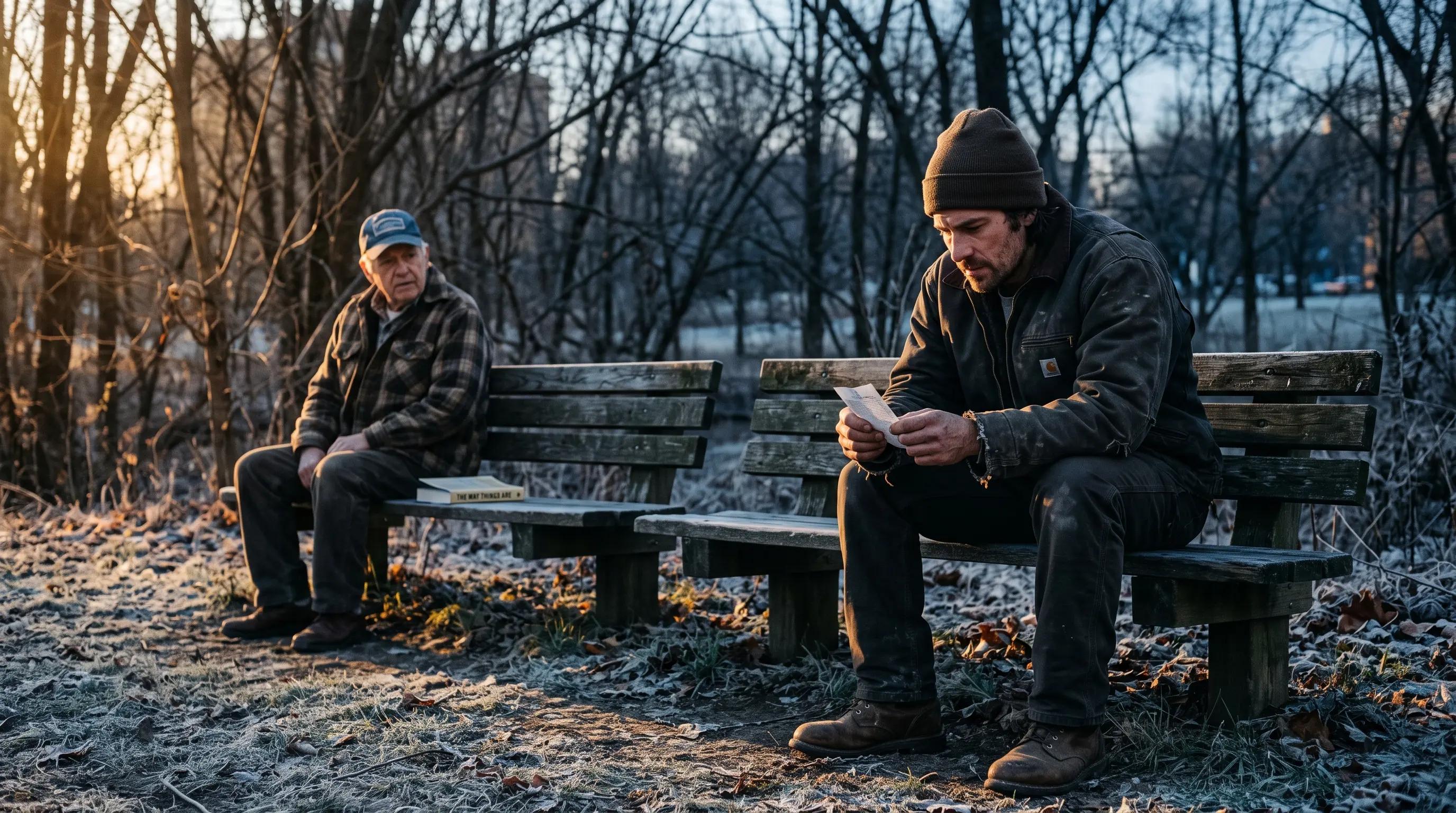
Michael sat alone on a weathered wooden bench, elbows resting on his knees.
For several minutes, he simply stared at the ground.
The Man on the Bench
"Rough day?"
The voice came from the other end of the bench.
Michael turned.
An older man sat there holding a paperback novel. He looked to be in his early seventies, wearing faded blue jeans, a heavy flannel jacket, and a gray baseball cap with the logo of a local hardware store stitched across the front.
He didn't look wealthy.
He looked comfortable.
Like someone who had stopped trying to impress the world years ago.
Michael forced a tired smile. "You could say that."
The man closed his book. "You lost your job."
Michael looked surprised. "Is it that obvious?"
The old man chuckled. "I've worn that same expression three different times in my life."
Something about his voice made Michael stay. There wasn't any judgment. Just experience.
"My name's Michael."
"Henry."
They shook hands.
For the next half hour they talked. Not about politics. Not about the economy. Just life.
Michael admitted something he'd never said out loud before.
"I work hard," he said quietly. "I always have. But somehow, I'm always broke."
Henry nodded slowly. "Most people think earning more money solves that problem."
"It doesn't?"
"It can." Henry smiled. "But only after you learn how to keep it."
The Receipt
The old man reached into his jacket pocket and pulled out a folded receipt.
Using a pen, he wrote a single number.
1%
He slid the receipt toward Michael.
"Every paycheck you ever receive again — before you pay a bill, before you buy groceries, before you spend a single dollar — save one percent."
Michael frowned. "One percent?"
"That's it."
"That won't make me rich."
Henry laughed. "No. It'll make you consistent."
Michael leaned back. "I've read personal finance articles before. They all tell you to save twenty percent, invest in index funds, build wealth, create passive income..."
"And how's that working for most people?"
Michael didn't answer.
Henry continued.
"The problem with most financial advice is that it's too big. People quit before they ever start. But one percent?"
He tapped the receipt again.
"Anyone can save one percent."
Michael stared at the tiny number.
It seemed almost pointless. Three dollars. Maybe four.
What difference could that possibly make?
Almost as if reading his thoughts, Henry smiled.
"The first dollar you save isn't about money."
"It's about proving to yourself that you're becoming someone who keeps promises."
The wind swept through the nearly empty park.
Michael folded the receipt and slipped it into his wallet.
"So where do I even begin?"
Henry stood up and adjusted his jacket.
"First, go find another paycheck. Any paycheck. It doesn't have to be your dream job. It just has to be your next one."
Then he started walking toward the parking lot.
Without looking back, he called over his shoulder.
"And when that first paycheck arrives, you'll know exactly what to do."
Michael watched him disappear between the trees, still holding the folded receipt in his hand.
For the first time in months, he wasn't thinking about everything he'd lost.
He was thinking about something much smaller.
One percent.
It sounded almost laughably insignificant.
But somehow, it also felt possible.
$3.18
The first month passed without anything dramatic happening.
Michael still stocked shelves during the overnight shift.
His back still ached after unloading heavy pallets. His apartment was still small. His paycheck still disappeared faster than he wanted.
But one thing had changed.
Every Friday morning, before paying a single bill, he transferred a tiny amount into a separate savings account.
The first transfer was just $3.18.
The second was almost the same.
It felt almost ridiculous.
"What difference can three dollars possibly make?"
The old version of Michael asked that question every week.
The new version answered it the same way every time.
"Because I'm becoming someone who saves first."
That tiny change quietly began changing everything else.
A few weeks later, Michael walked into a convenience store before work.
He reached for his usual energy drink.
Then he paused.
Three dollars. Again.
He suddenly remembered transferring nearly the same amount into savings that morning.
For the first time in his life, he didn't just see a drink.
He saw a choice.
"Do I want five minutes of energy, or another day closer to financial freedom?"
He smiled to himself.
He grabbed a bottle of water instead.
It wasn't about the drink.
It was about becoming aware.
Little by little, Michael stopped spending automatically.
Unused subscriptions disappeared. Random online purchases became rare. Restaurant meals turned into home-cooked dinners several nights each week.
None of these decisions felt painful.
They simply felt intentional.
That was something he'd never experienced before.
Three Months Later
Three months after opening the savings account, Michael checked the balance.
$400.
It wasn't enough to change his life.
But it changed something even more important.
It changed his confidence.
For years, he'd believed saving money was impossible.
Now he had proof sitting in his account.
Proof that discipline worked. Proof that small habits could build something real.
That confidence spilled into other parts of his life.
He started arriving at work fifteen minutes early. He volunteered for extra responsibilities. Instead of rushing home after every shift, he asked questions.
How did inventory management work? How were schedules created? Why were certain products ordered in larger quantities?
His manager noticed.
"You've really stepped up lately," she told him one afternoon. "I appreciate that."
Six months later, Michael was promoted to assistant shift supervisor.
The raise wasn't huge. Just enough to make breathing a little easier.
Instead of increasing his spending, he increased his savings.
His weekly transfer grew from a few dollars to nearly $40.
The habit stayed exactly the same.
Only the number changed.
The Library
One Saturday morning, Michael visited the local library.
Not because he loved reading. Because he wanted to understand something Henry had mentioned on that park bench months earlier.
Compound interest.
He checked out several books on investing, building wealth, and personal finance.
To his surprise, none of them promised overnight success.
They all repeated the same boring message.
Save consistently. Invest regularly. Give your money time.
Time was the secret ingredient.
He opened a simple investment account and began buying a low-cost index fund every month. Nothing complicated. No risky stock picking. No chasing headlines.
Just steady investing.
Month after month. Year after year.
What His Friends Said
Friends didn't understand.
At a neighborhood barbecue, his longtime friend Tyler laughed after hearing about Michael's investment account.
"So let me get this straight, you work nights, skip expensive coffee, and invest forty bucks a week?"
Everyone laughed.
Michael smiled.
A year earlier, those jokes would've embarrassed him.
Now they barely registered.
Because he wasn't trying to impress anyone anymore.
He was building a future nobody else could see.
Ordinary Tuesdays
Years passed quietly.
There were no lottery wins. No miracle business opportunities. No viral success stories.
Just ordinary Tuesdays. Ordinary Fridays. Ordinary automatic transfers.
By his tenth year of investing, Michael opened his account one evening and stared at the screen.
The balance had crossed $100,000.
He didn't celebrate. He simply sat there smiling.
Not because of the money.
Because he remembered standing outside that coffee shop years earlier with only $41 in his account.
The numbers weren't what made him emotional.
The journey was.
What $100,000 Actually Feels Like
When Michael turned fifty-six, his mortgage was fully paid.
His emergency fund covered nearly a full year of expenses. His investment portfolio continued growing quietly in the background.
Life wasn't luxurious.
But it was peaceful.
His car broke down one winter morning. Instead of panic, he scheduled the repair.
His roof needed replacing the following summer. He paid the contractor without losing sleep.
That kind of security felt priceless.
Money hadn't solved every problem.
But it had removed the constant fear.
And fear had been the heaviest burden of all.
The Empty Bench
Sometimes Michael walked through the same city park where he'd first met Henry.
The old bench was still there.
The elderly man never returned.
No phone number. No address.
Just one conversation that had permanently changed the direction of another person's life.
Michael often wondered if Henry knew how many decisions had flowed from that single folded receipt.
Maybe he never would.
Before You Go
The 1% rule was never really about percentages.
It was about identity.
It was about proving to yourself that your future deserved something before everyone else got paid.
It was about replacing excuses with consistency.
Most people believe financial freedom begins with earning more money.
Sometimes it does.
But far more often, it begins with managing the money you already have.
Wealth isn't built by giant leaps.
It's built by thousands of small decisions repeated over many years.
The coffee you skip. The dollars you invest. The habit you refuse to break.
Those tiny moments become your future.
You don't need a perfect salary. You don't need perfect timing. You don't need to understand every investing strategy before you begin.
You simply need to start.
Save one percent. Invest one percent. Trust the process. Then when your income grows, let your savings grow with it.
Because compound interest, consistency, and time have built more financial freedom than luck ever has.
The hardest dollar you'll ever save is the first one.
After that, momentum becomes your greatest financial asset.
So ask yourself one simple question today.
What's your version of $3.18?
Whatever that number is, start there.
Your future self will be grateful you did.
Did this story make you want to open a savings account tonight? Share it with someone who needs to find their first one percent.
Every story matters
Real stories like this one remind us that no matter how difficult life gets, people find a way through. If this story moved you, share it — you never know who needs to read it today.
Share this story
More in Overcome Poverty
You might also like

The $10,000 Goal That Changed His Life
He thought making more money meant working harder. Then one simple exercise changed the way he saw his future.
The Grocery Clerk Who Broke the Paycheck-to-Paycheck Cycle
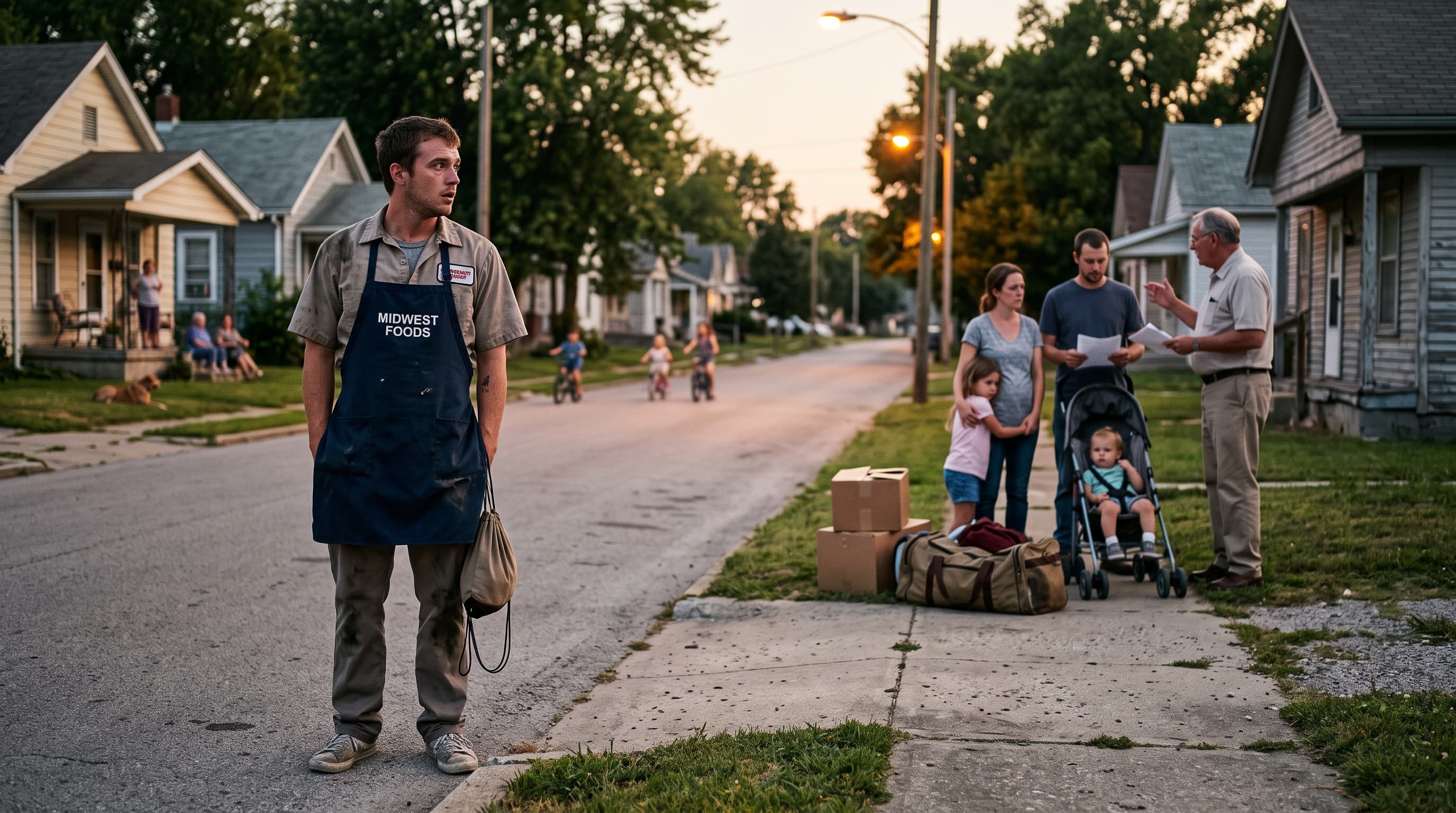
Michael worked harder than almost anyone he knew. Every morning before sunrise, he walked forty minutes to Harrison's Market in Springfield, Missouri. Every payday he felt hopeful for exactly one weekend. Then the money was gone, and the waiting started again. He told himself his salary was the problem. Then one Saturday evening he watched a family get evicted, and heard something that changed everything.

He Could Never Save a Dollar, Until a 100-Year-Old Japanese Budget Changed His Life
Ryan Parker hated payday. Not because he didn't earn enough, but because payday always gave him hope. And hope usually lasted about two days. When his elderly neighbor introduced him to a forgotten Japanese budgeting method called Kakeibo, Ryan discovered that financial freedom doesn't begin with earning more. It begins with finally paying attention.